.png)
.svg)
.png)

What Not to Eat or Drink After Getting Implants?
.png)
.png)
After getting dental implants, you should avoid hard, crunchy, sticky, spicy, and acidic foods along with hot beverages, alcohol, and carbonated drinks for at least the first 1 to 2 weeks. These foods and drinks can irritate the surgical site, dislodge the blood clot, slow down healing, and even increase the risk of implant failure. According to the American College of Prosthodontists, about 178 million Americans are missing at least one tooth, and dental implants are one of the most effective ways to replace them. What you eat and drink after the procedure plays a direct role in how fast you heal and how well the implant fuses with your jawbone. This article covers every food and drink you need to stay away from, why each one matters, and exactly when you can start eating normally again.
What Foods Should You Not Eat After Dental Implants?
The foods you should not eat after dental implants are anything hard, crunchy, sticky, spicy, or acidic for at least the first 7 to 14 days. These foods put pressure on the surgical site, irritate tender gum tissue, or get lodged around the implant and create a breeding ground for bacteria. A study published in BMC Oral Health in 2025 found that higher protein intake improved early wound healing and reduced pain after oral surgery, but that protein has to come from soft sources during the first two weeks. The wrong foods at the wrong time can undo all the careful work that went into placing the implant.
We tell every patient the same thing: your mouth just went through surgery, and it needs time to heal without being disturbed. The titanium post needs to bond with your jawbone through a process called osseointegration, which takes 3 to 6 months. According to the National Library of Medicine, osseointegration takes 3 to 4 months in the lower jaw and 4 to 6 months in the upper jaw. Everything you eat during that time either helps or hurts this process.
Why Are Hard and Crunchy Foods Harmful After Implants?
Hard and crunchy foods are harmful after implants because they put direct pressure on the surgical site and can shift or damage the implant before it has bonded with the bone. Foods like chips, nuts, raw carrots, pretzels, popcorn, hard candy, and taco shells require a lot of biting force. That force can irritate your gums, break open the incision, or even move the implant out of position during the critical early healing window.
Popcorn is one of the worst offenders. The small hulls can wedge themselves between the gum and the implant post, which is nearly impossible to remove without disturbing the healing tissue. A regular dental exam after the healing period will confirm that the implant has fully integrated and you are safe to go back to harder foods.
Can You Eat Sticky Foods After Getting Dental Implants?
No, you cannot eat sticky foods after getting dental implants, at least not during the healing period. Sticky foods like caramel, taffy, gummy candy, peanut butter, and chewing gum can pull at the stitches, cling to the surgical site, and trap bacteria around the implant. According to oral surgery recovery guidelines published by the American Dental Association, sticky foods rank among the top causes of post-surgical irritation because they adhere to soft tissue and are difficult to rinse away gently.
Even after the initial 2-week healing period, be cautious with very sticky foods until your dentist gives you the green light. The last thing you want is to disturb the implant while the bone is still forming around it.
Why No Dairy After Dental Implants?
Some dentists recommend avoiding dairy after dental implants because dairy products can increase mucus production in the mouth and may interfere with certain antibiotics prescribed after surgery. Antibiotics like tetracycline and ciprofloxacin interact with the calcium in dairy, which can reduce how well the medication is absorbed into your body. When the antibiotic does not work at full strength, it leaves the implant site more vulnerable to infection.
That said, the science on this topic is not settled. There is no strong clinical evidence that dairy must be completely avoided after implant surgery. Dairy is actually a good source of calcium, protein, and vitamin D, all of which support bone healing. Most dentists recommend skipping dairy for just the first 48 to 72 hours as a precaution, especially while you are taking antibiotics. After that, soft dairy options like yogurt and cottage cheese are often fine. If a nearby tooth also has decay, a tooth-colored filling before or after the implant procedure can help keep bacteria levels low in your mouth during recovery.
What Should You Not Drink After Dental Implant Surgery?
What you should not drink after dental implant surgery includes alcohol, hot coffee, hot tea, carbonated beverages, and acidic juices like orange juice or lemonade. Each of these drinks can slow down healing, increase swelling, irritate the surgical site, or interact with your medications. According to ClearChoice Dental Implant Centers, alcohol dehydrates oral tissues, reduces saliva flow, and gives bacteria an easier path to multiply around the healing site.
Water is the single best thing you can drink during recovery. Staying hydrated keeps saliva flowing, flushes bacteria, and helps your body transport nutrients to the implant site. Aim for 8 to 10 glasses of water a day, and drink at room temperature or slightly cool. Our patients in Hialeah, Florida who stay well-hydrated during recovery consistently heal faster and report less discomfort.
How Soon After Dental Implants Can You Drink Alcohol?
You should wait at least 72 hours to 2 weeks before drinking alcohol after dental implants, depending on your dentist's instructions. The first 72 hours are the most critical for blood clot formation and early healing. Alcohol thins the blood, which increases bleeding and can dislodge the clot that protects the surgical site. According to a recovery guide from the Hanna Dental Implant Center, drinking alcohol too soon can delay healing, raise the risk of infection, and even lead to implant failure during the critical post-operative phase.
Alcohol also interacts with prescribed antibiotics and pain medication. Mixing alcohol with these drugs can cause drowsiness, nausea, raised blood pressure, and reduced effectiveness of the medication itself. If you have been prescribed antibiotics, do not drink any alcohol until you finish the entire course.
Can You Drink Coffee After Getting Dental Implants?
You can drink coffee after getting dental implants, but not right away. Hot coffee should be avoided for at least the first 48 to 72 hours because the high temperature can increase blood flow to the surgical area, which leads to more swelling and a higher chance of bleeding. Once the initial healing phase passes, lukewarm coffee is usually acceptable. Long-term, coffee does not damage implants, but it can stain the crown over time, just like it stains natural teeth.
Iced coffee without a straw is a better option in the first few days if you really need your caffeine fix. Using a straw creates suction in the mouth, which can pull the blood clot out of the socket and lead to a painful condition called dry socket.
Are Carbonated Drinks Safe After Implant Surgery?
No, carbonated drinks are not safe after implant surgery for at least the first week. The bubbles in soda, sparkling water, and energy drinks can irritate the raw tissue around the implant. Many carbonated drinks also have high acid content, which creates an unfriendly environment for healing. According to recovery guidelines from oral surgery practices, carbonated beverages can disturb blood clots and increase the risk of infection at the surgical site.
Sodas also tend to be loaded with sugar. Bacteria feed on sugar, and the last thing a fresh surgical wound needs is extra bacterial activity. Stick to plain water, herbal tea at room temperature, or diluted fruit smoothies (no seeds, no straw) during the first 1 to 2 weeks.
What to Eat the First Day After a Dental Implant
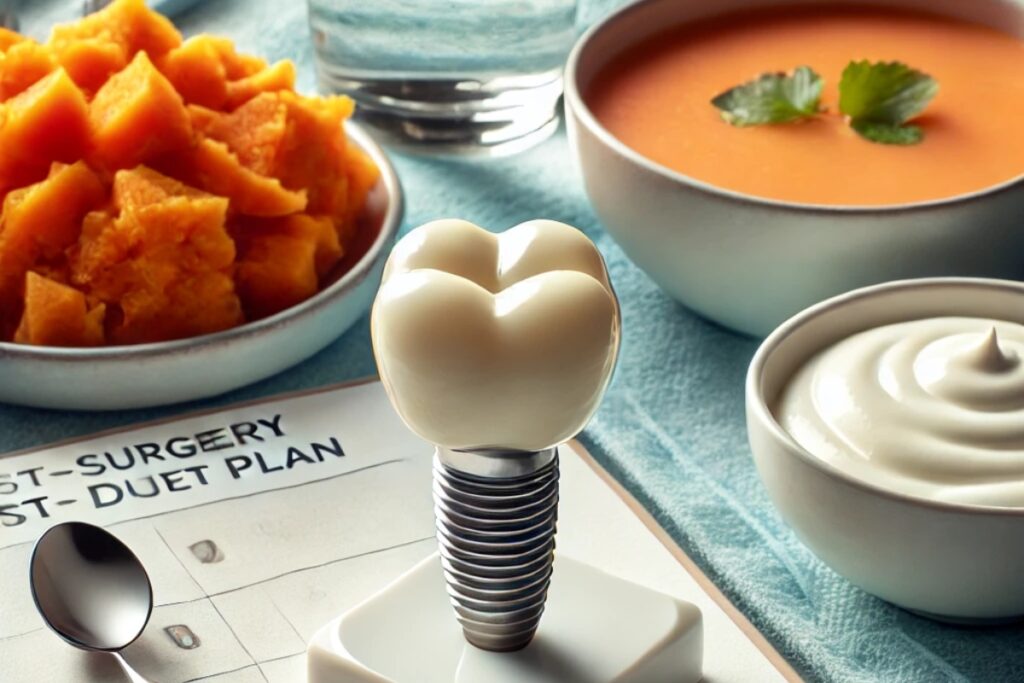
The first day after a dental implant, eat only cool or room-temperature liquids and very soft foods that require zero chewing. Good options include cool broth, smooth blended soups (not hot), yogurt (if not taking antibiotics that interact with dairy), applesauce, mashed avocado, and protein smoothies made without seeds. About an hour after surgery, you can remove the gauze and begin eating carefully.
Getting enough protein is critical from day one. A 2025 study published in BMC Oral Health found that patients who consumed more protein in the days after oral surgery had improved wound healing, less pain, and faster functional recovery. During recovery, aim for 1.2 to 1.6 grams of protein per kilogram of body weight each day. Good soft protein sources include scrambled eggs, Greek yogurt, protein shakes, mashed beans, and cottage cheese. If you had a tooth extraction at the same time as your implant placement, the soft-food phase may last a bit longer.
What Helps Dental Implants Heal Faster?
What helps dental implants heal faster is a combination of proper nutrition, good oral hygiene, avoiding tobacco and alcohol, staying hydrated, and following all of your dentist's post-operative instructions. Vitamin C is especially important because it supports collagen production, which is the structural protein your gums need to repair themselves. According to research published in the Journal of Dental Research, adequate vitamin C intake plays a direct role in soft tissue healing and immune response after oral surgery.
Calcium and vitamin D also matter because they support bone growth around the implant. The National Institutes of Health recommend at least 1,000 mg of calcium and 600 to 800 IU of vitamin D daily for adults. Leafy greens, fortified foods, salmon, and eggs are all good sources. Getting enough sleep, reducing stress, and avoiding strenuous physical activity for the first few days also give your body the best chance to heal quickly.
What Is the Most Painful Day After Dental Implants?
The most painful day after dental implants is usually day one, the first 24 hours after the procedure. A study published in the International Journal of Oral and Maxillofacial Implants found that the average pain score was 24 out of 100 on day one, dropped to 12 by day three, and fell to just 9 by day six. So while discomfort is normal, it fades fast for most patients.
Over-the-counter pain relievers and any medications your dentist prescribes will manage the soreness during this time. Applying ice to the outside of your cheek in 20-minute intervals during the first 48 hours also helps reduce swelling. A teeth cleaning before the surgery helps keep bacteria levels low so your mouth has a cleaner starting point for healing.
Foods and Drinks to Avoid After Dental Implants by Recovery Stage
Recovery StageFoods to AvoidDrinks to AvoidDay 1 to 3 (Soft Liquids Only)All solid foods, anything hot, spicy, crunchy, sticky, or acidicHot coffee, hot tea, alcohol, carbonated drinks, acidic juicesDay 4 to 14 (Soft Solids)Nuts, chips, popcorn, raw vegetables, tough meats, seeds, hard bread, caramel, gummy candyAlcohol, very hot drinks, soda, citrus juicesWeek 3 to 6 (Semi-Solid Foods)Very hard or crunchy foods, chewy steak, hard candy, whole raw applesExcessive alcohol, highly acidic drinksMonth 2 to 6 (Gradual Return to Normal)Use caution with extremely hard or sticky items until dentist confirms full osseointegrationNo major restrictions; maintain good hydration
Sources: American Dental Association, National Library of Medicine, International Journal of Oral and Maxillofacial Implants, BMC Oral Health (2025)
How Long Does It Take for a Dental Implant to Fuse to the Bone?
It takes 3 to 6 months for a dental implant to fuse to the bone through a process called osseointegration. According to the National Library of Medicine, lower jaw implants typically fuse in 3 to 4 months, while upper jaw implants take 4 to 6 months because the upper jaw has softer, less dense bone. During this entire period, the foods and drinks you choose either support or slow down this fusion.
A large-scale study published in the National Library of Medicine in 2025 analyzed over 158,000 implants and found that 70% of all implant failures happened within the first year. Many of those failures were connected to problems during the early healing phase, including poor diet, smoking, and not following post-operative instructions. Protecting the implant site with the right foods is not optional. It is part of the treatment. If bone loss is a concern, your dentist may discuss whether a dental crown or other restoration can help support the area long-term.
What Should I Do the Night Before Dental Implants?
The night before dental implants, you should eat a normal dinner, brush and floss your teeth, lay out comfortable clothing with short sleeves, and get a full night of sleep. If you are receiving sedation, stop eating and drinking by midnight. Prepare your kitchen with soft foods and fill any prescriptions your dentist has given you so everything is ready for when you get home. If you currently wear a temporary dental bridge, ask your dentist whether to wear it or leave it out on the day of surgery.
Avoid alcohol the night before surgery because it thins the blood and can affect how your body responds to anesthesia. Also make sure your ride is confirmed for the morning. If you are nervous about the procedure, know that you are not alone. According to research published in the International Journal of Implant Dentistry, about 67% of patients experience moderate to high anxiety before implant surgery. Being prepared and knowing what to expect makes a real difference.
Can Smoking Slow Down Implant Healing?
Yes, smoking can slow down implant healing significantly. A 2024 systematic review published in the Journal of Dentistry analyzed over 59,000 implants and found that smokers had a 159% higher risk of early implant failure compared to non-smokers. Nicotine reduces blood flow to the gums and jawbone, which starves the implant site of the oxygen it needs to heal. According to a meta-analysis published in the National Library of Medicine, non-smokers have a 95% implant success rate while smokers drop to 85% to 90%.
We recommend stopping all tobacco use at least two weeks before surgery and staying smoke-free for at least eight weeks after. Even e-cigarettes and vaping products contain nicotine and can have similar effects on healing. If you need help quitting, talk to your doctor about a cessation plan before your implant appointment. Patients who are also dealing with gum-related issues may benefit from oral cancer screenings during their routine checkups to stay ahead of any tissue changes.
When Can You Eat Normally After Dental Implants?
You can eat normally after dental implants once osseointegration is complete, which typically takes 3 to 6 months. Most patients start reintroducing semi-solid foods around week 3 and gradually add harder foods as healing progresses. By the time your dentist confirms that the implant has fully fused with the bone, you can eat steak, apples, nuts, popcorn, and anything else you enjoy without restrictions.
One of the biggest benefits of dental implants over other tooth replacement options is that they restore up to 90% of normal chewing function, according to Aspen Dental. That means once you are fully healed, there are no permanent food restrictions. You eat, chew, and bite just like you would with natural teeth. If you lost multiple teeth and are using full or partial dentures as a temporary fix while saving for implants, the diet restrictions with dentures are much more limiting in the long run.
Frequently Asked Questions
Do People Regret Getting Dental Implants?
Most people do not regret getting dental implants. Studies consistently show high patient satisfaction rates. According to the National Library of Medicine, dental implants have a 95% to 98% success rate, and the vast majority of patients report improved quality of life, better chewing ability, and higher confidence after the procedure.
Which Is Worse, a Tooth Extraction or an Implant?
A tooth extraction and an implant are similar in terms of discomfort, but most patients say the implant procedure is about the same or even easier than they expected. Both use local anesthesia to numb the area. A study in the International Journal of Oral and Maxillofacial Implants found that patients rated implant pain as mild to moderate on average, with the worst discomfort lasting only the first day.
What Is the Pain Scale for Dental Implants?
The pain scale for dental implants is generally mild to moderate. Research shows an average pain score of 24 out of 100 on day one, dropping to 12 by day three and 9 by day six. Most patients manage their discomfort with over-the-counter pain relievers and ice packs during the first 48 hours.
How Many 70 Year Olds Still Have All Their Teeth?
Very few 70-year-olds still have all their teeth. According to the CDC, about 26% of adults aged 65 and older have 8 or fewer remaining teeth, and the National Institute of Dental and Craniofacial Research reports that adults over 65 have lost an average of 6.4 teeth due to disease. Dental implants offer older adults a reliable way to restore lost teeth and improve nutrition.
Can You Get a Full Set of Implants in One Day?
You can get a full set of implants placed in one day with procedures like All-on-4, where four to six implants support a full arch of teeth. However, the total treatment from start to finish is not completed in a single calendar day. The implants still need 3 to 6 months to fully fuse with the jawbone, and temporary teeth are often placed on the same day while permanent ones are made later.
Which Is Healthier, a Root Canal or an Implant?
Whether a root canal or an implant is healthier depends on the condition of the tooth. A root canal is healthier if the tooth can be saved because keeping your natural tooth preserves the surrounding bone and tissue. An implant is the better option if the tooth is too damaged or decayed to repair. Both treatments have high success rates, so the right choice depends on your specific situation.
How Long Does a Full Set of Implants Take to Heal?
A full set of implants takes 3 to 6 months to fully heal and complete osseointegration. The initial soft-tissue healing happens in the first 1 to 2 weeks, but the bone needs several more months to fuse permanently with the titanium posts. Full-arch cases may take slightly longer than single implants because more surgical sites are involved.
The Takeaway
What you eat and drink after getting dental implants is just as important as the surgery itself. Avoiding hard, crunchy, sticky, spicy, and acidic foods along with alcohol, hot beverages, and carbonated drinks gives your implant the best chance to heal properly and last for decades. According to the National Library of Medicine, dental implants have a success rate above 95% when patients follow their recovery plan carefully. The diet restrictions are temporary, but the results are permanent. Once your implant fully fuses with the bone, you can go back to eating everything you love without limits.
If you have questions about what to eat during recovery or want to learn more about the implant process, Castellanos Dental is here to help every step of the way. Call us at 305-820-4080 to schedule a consultation.

.png)
.png)

.png)


.png)
.png)
.png)

.png)
.png)
.svg)


