.png)
.svg)
.png)

What Are Tooth-Colored Fillings Made Of?
.png)
.png)
Tooth-colored fillings are made of composite resin, which is a mix of plastic (acrylic resin) and fine glass particles like quartz or silica. This material is shaded to match the color of your natural teeth, making the filling nearly invisible. According to the U.S. Food and Drug Administration (FDA), composite resin fillings are the most common alternative to traditional silver amalgam. With over 90% of American adults experiencing at least one cavity in their lifetime, according to the Centers for Disease Control and Prevention (CDC), millions of people need fillings every year. This article explains exactly what goes into tooth-colored fillings, how they compare to other options, how long they last, and what families in the Hialeah, Florida area should know before choosing one.
What Are Tooth-Colored Fillings Made From?
Tooth-colored fillings are made from composite resin, a blend of acrylic plastic and powdered glass filler. According to the FDA, the color of composite resins can be customized to closely match the shade of your surrounding teeth. This is why many people call them "white fillings" or "tooth-colored fillings."
The plastic part of the filling is usually a material called Bis-GMA (bisphenol A glycidyl dimethacrylate) or a similar type of dental resin. The glass filler gives the filling strength and helps it stand up to the pressure of chewing. A bonding agent, or dental adhesive, is also used to attach the filling directly to the surface of your tooth.
Once the composite resin is placed inside the tooth, your dentist uses a special blue LED curing light to harden each layer. According to the Journal of the American Dental Association, composite materials bond to teeth adhesively, which means less of the healthy part of the tooth needs to be removed compared to silver fillings. Families across West Hialeah who need a cavity filled often choose this option because it looks natural and saves more of the original tooth.
Are Tooth-Colored Fillings the Same as Composite Fillings?
Yes, tooth-colored fillings are the same as composite fillings. Both names describe the same material, which is a resin and glass mixture that matches the look of a natural tooth. The American Dental Association (ADA) uses the terms "composite resin" and "tooth-colored fillings" to describe this material.
You may also hear them called "white fillings." No matter the name, the material is the same. According to Grand View Research, the composite resin segment dominated the U.S. tooth filling materials market with revenue of about $242.6 million in 2023. This shows just how popular these fillings have become among patients and dentists alike.
Many patients visiting a general and family dentistry practice prefer composite fillings for both front and back teeth because they blend in so well.
How Long Do Tooth-Colored Fillings Last?
Tooth-colored fillings last between 5 and 15 years on average, depending on the size of the filling, where it is placed in the mouth, and how well you take care of your teeth. A study published in the Journal of Dental Research found that over 90% of composite fillings lasted more than 5 years. A separate Georgetown University study found that after 5 years, about 92% of composite fillings were still working well.
Research published on ScienceDirect reviewed 21 long-term studies and concluded that at least 60% of composite resin fillings will last more than 10 years when the right materials are used correctly. A study in the Journal of Dentistry reported that the annual failure rate for composite fillings on back teeth ranges between 1% and 3%.
Several things can shorten or extend how long your filling lasts. Teeth grinding, poor brushing habits, eating a lot of sugary foods, and the size of the cavity all play a role. Patients in Hialeah who keep up with regular preventive dentistry visits can help their fillings last as long as possible.
Which Tooth Fillings Are Best?
The best tooth filling depends on the size and location of the cavity, your budget, and how important a natural look is to you. For most small to medium cavities, composite resin is the best overall choice because it looks natural, bonds directly to the tooth, and preserves more healthy tooth structure.
According to the ADA, gold fillings are among the most durable, lasting 20 years or more, but they are also the most expensive. Silver amalgam fillings are strong and affordable but contain mercury and are very noticeable. Ceramic fillings made from porcelain can last up to 15 years, according to Cleveland Clinic, but they cost more and require two visits.
A Fact.MR market report found that composite fillings now account for 33% of the global tooth filling materials market, leading all other types. Silver amalgam holds about 24%. This shift shows that patients and dentists increasingly prefer the natural look and tooth-saving benefits of composite resin. Many Hialeah families choose cosmetic dentistry options like tooth-colored fillings to keep their smiles looking their best.
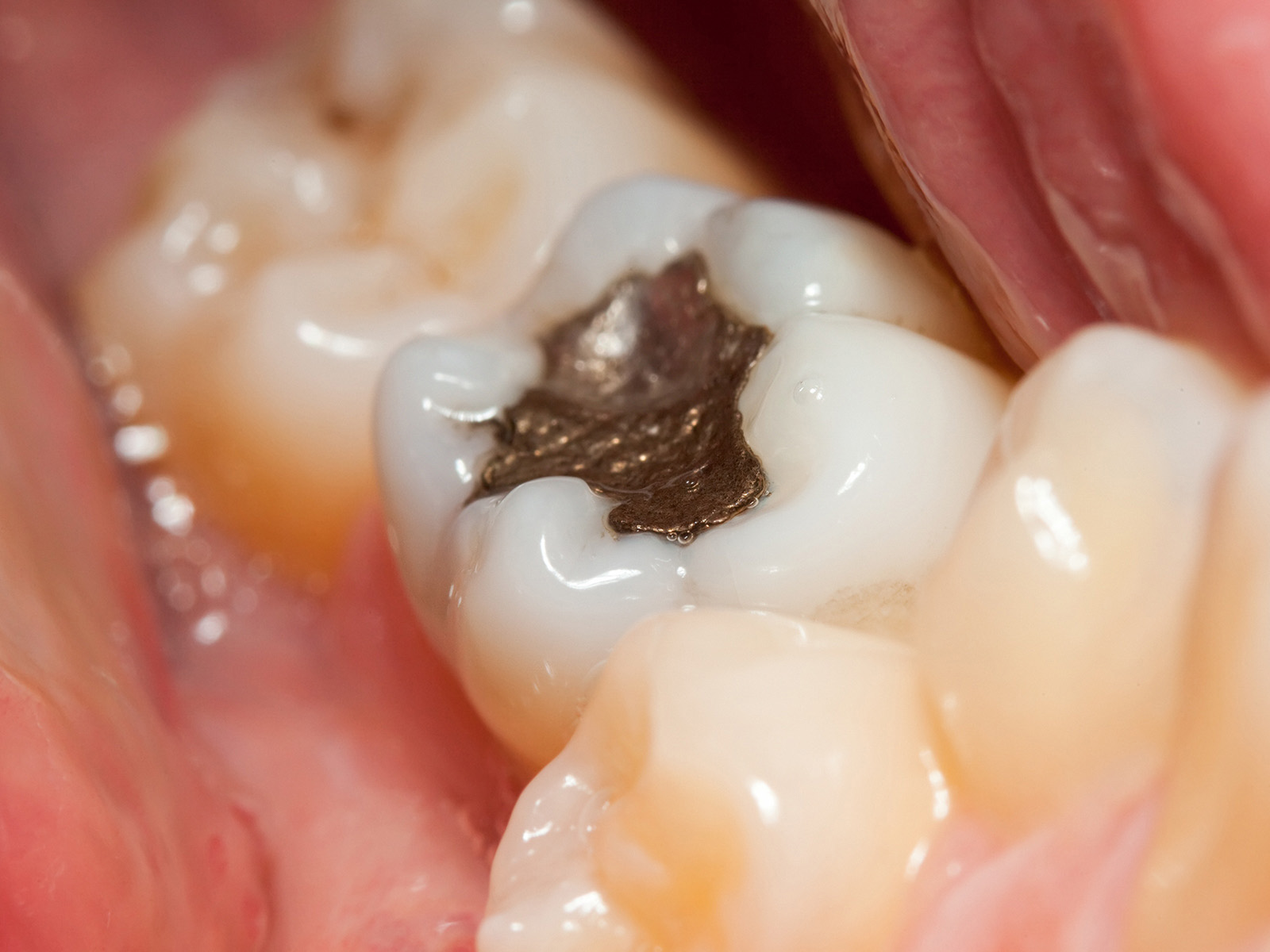
Tooth-Colored Fillings vs. Silver Amalgam Fillings: How Do They Compare?
Tooth-colored fillings and silver amalgam fillings differ in material, appearance, durability, and how much healthy tooth must be removed. Here is a side-by-side comparison using data from trusted sources.
FeatureTooth-Colored (Composite Resin)Silver (Amalgam)MaterialAcrylic resin + powdered glassMercury, silver, tin, copperAppearanceMatches natural tooth colorSilver/dark gray, very noticeableAverage Lifespan5 to 15 years10 to 15 yearsTooth PreservationMore healthy tooth saved (bonds adhesively)More drilling needed (held by shape)Contains MercuryNoYes (about 50% by weight)Best ForSmall to medium cavities, visible teethLarge cavities on back teethMarket Share (2025)33% of global market24% of global market
Sources: U.S. Food and Drug Administration (FDA), American Dental Association (ADA), Fact.MR Tooth Filling Materials Market Report 2025, Cleveland Clinic, Journal of the American Dental Association
Are Tooth-Colored Fillings Safe?
Yes, tooth-colored fillings are safe. Both the FDA and the ADA classify composite resin as a safe and effective dental material. The FDA places dental composite in the same safety category (Class II medical device) as porcelain and gold fillings.
Some people have asked about BPA (bisphenol A) in composite fillings. According to the ADA, pure BPA is not a direct ingredient in composite resin. The resin does use a chemical called Bis-GMA, which is a derivative of BPA. However, the ADA Science Institute analyzed dental sealants and composites and found extremely low levels of BPA release, with levels returning to normal within hours of placement. The ADA has stated that BPA in composites does not present a hazard to patients or dentists.
A study published in the journal Environmental Health Perspectives confirmed that any BPA exposure from dental materials is brief and far below the safety limits set by the European Food Safety Authority. The FDI World Dental Federation also confirmed that pure BPA is not a component of any dental filling material.
Is It Painful to Replace Old Fillings?
No, it is not painful to replace old fillings. Your dentist will numb the area around the tooth with a local anesthetic before removing the old filling. You should feel little to no discomfort during the procedure.
According to Cleveland Clinic, some patients may feel mild sensitivity to hot and cold for a few days after the new filling is placed, but this goes away quickly. If you have old silver fillings that are cracking or darkening, replacing them with tooth-colored composite can improve both the look and the health of your tooth. Dentists in the West Hialeah area regularly help patients make this switch during a single office visit.
Can You Replace Old Silver Fillings With Tooth-Colored Fillings?
Yes, you can replace old silver fillings with tooth-colored fillings. Many dentists across the country now offer this as a routine procedure. The old amalgam is carefully removed, the tooth is cleaned, and a new composite resin filling is bonded in its place.
Data from a Virginia Commonwealth University study published in DrBicuspid.com showed that the use of dental amalgam in the U.S. dropped by 80%. This decline is driven by patient demand for natural-looking fillings and growing concerns about mercury in amalgam. Research from the National Institutes of Health shows that the shift toward composite materials continues to accelerate.
Patients in Hialeah, Florida who want to update their old silver fillings can talk to their dentist about whether restorative dentistry options like composite replacements are right for them.
Does Insurance Cover Tooth-Colored Fillings?
Yes, most dental insurance plans cover tooth-colored fillings, at least in part. According to Humana, insurance providers may cover up to 80% of the cost of fillings after you meet your deductible. Many plans treat composite fillings on front teeth the same as amalgam fillings.
For back teeth, some insurance companies will only pay the amount they would for an amalgam filling and ask you to cover the difference. Every plan is different, so it is a good idea to check with your insurance provider before your appointment.
Families in the West Hialeah area looking for help with costs can explore insurance and financing options to make treatment more affordable.
Is It Worth Removing Amalgam Fillings?
Yes, it is worth removing amalgam fillings in many cases. The most common reasons to replace them include cracking, wear, decay forming around the old filling, or simply wanting a more natural look.
In September 2020, the FDA advised that certain high-risk groups, including pregnant women and people with neurological conditions like multiple sclerosis or Parkinson's disease, should avoid getting new amalgam fillings whenever possible. A 2016 study found that the average amalgam filling needed replacement after about 15 years. If your silver fillings are that old or older, it may be a good time to consider switching.
While amalgam is still considered safe for most people by both the FDA and the ADA, the trend is clearly moving toward mercury-free options. Composite resin gives you a filling that looks natural while still being strong and reliable.
What Happens If You Delay Getting a Filling?
If you delay getting a filling, the cavity will keep growing. Bacteria continue to eat away at the tooth, making the decay larger and deeper. What starts as a small cavity that needs a simple filling can turn into a much bigger problem.
According to the CDC, about 1 in 5 adults aged 20 to 64 have untreated cavities. Leaving decay untreated can lead to pain, infection, and even the need for a root canal or tooth extraction. The National Institute of Dental and Craniofacial Research (NIDCR) reports that adults aged 20 to 64 had an average of 9.3 decayed, missing, or filled teeth, showing how common tooth decay really is.
Getting a filling as soon as your dentist finds a cavity is always the smartest choice. It saves you time, money, and discomfort down the road.
Why Would a Filling Lead to a Root Canal?
A filling can lead to a root canal when the decay in the tooth has already reached or gotten very close to the nerve (pulp) inside the tooth. If the cavity is deep, even a well-placed filling may not be enough to protect the nerve from infection.
In some cases, an older filling that has cracked or worn down allows new bacteria to get underneath it, causing decay to spread deeper into the tooth. When the pulp becomes infected or inflamed, a root canal is the only way to save the tooth.
This is one more reason why getting cavities treated early matters. A small cavity caught during a routine dental exam can be fixed with a simple filling. Waiting too long can turn that same cavity into something much more serious.
What Shortens a Filling's Lifespan?
Several things shorten a filling's lifespan. Teeth grinding (bruxism), poor oral hygiene, eating hard or sticky foods, and large cavity size all contribute to fillings wearing out faster.
According to the meta-analysis published in the Journal of Dental Research, patients with a high risk of cavities had failure rates 2 to 3 times higher than low-risk patients. Fillings that cover more surfaces of the tooth also tend to fail sooner. Front-tooth fillings generally last longer than back-tooth fillings because molars deal with much more chewing force.
Keeping up with brushing, flossing, and regular professional teeth cleanings is the best way to protect your fillings and your overall dental health. Patients in Hialeah who stay on top of their dental care tend to get the longest life out of their composite fillings.
Are Fillings Better Than Root Canals?
Yes, fillings are better than root canals when the decay is caught early. A filling is a simpler, faster, and less expensive procedure. It fixes the problem before it reaches the nerve of the tooth.
A root canal becomes necessary only when the decay or infection has spread into the pulp of the tooth. Root canals save the tooth, but they take more time, require more visits, and typically need a dental crown to protect the tooth afterward.
The bottom line is this: catching cavities early and filling them right away is always easier and less costly than waiting until a root canal is needed. Regular dental visits make early detection possible.
What Were Tooth Fillings Made of 50 Years Ago?
Fifty years ago, tooth fillings were almost always made of dental amalgam, a mix of mercury, silver, tin, and copper. Gold fillings were also used, especially for patients who could afford them. Composite resin fillings existed in the 1960s, but they were not strong or reliable enough for wide use at that time.
According to the ADA, dentists have used amalgam for over 150 years. It was the standard filling material for most of the 20th century because it was cheap, easy to place, and very durable. However, concerns about mercury exposure and the demand for better-looking fillings have led to a major shift toward composite materials.
Today, advances in resin and glass filler technology mean that composite fillings are stronger and longer-lasting than ever before. Many patients in Hialeah Gardens and West Hialeah who still have old silver fillings from decades ago are now choosing to replace them with modern tooth-colored options.
What Is the Least Toxic Dental Filling?
The least toxic dental filling is composite resin. It contains no mercury and is made from a plastic and glass mixture that both the FDA and the ADA consider safe. Ceramic (porcelain) fillings are also very biocompatible but cost more and require lab work.
Glass ionomer fillings, which are made from acrylic and glass, are another low-toxicity option. According to the FDA, glass ionomer cements are tooth-colored and self-curing, and they release fluoride over time, which helps prevent future decay. However, they are weaker than composite and are best for small cavities not on chewing surfaces.
For patients who want a safe, strong, and natural-looking filling, composite resin is the go-to choice. It gives you the best balance of safety, appearance, and function.
Frequently Asked Questions
Are Tooth-Colored Fillings a Good Choice for Kids in Hialeah?
Yes, tooth-colored fillings are a good choice for kids in Hialeah. Composite resin bonds well to teeth, looks natural, and does not contain mercury. The ADA supports the use of composite fillings for children. Many families across South Florida prefer this option for their kids because it is safe and looks better than silver fillings.
How Much Do Tooth-Colored Fillings Cost in the Hialeah Area?
The cost of tooth-colored fillings in the Hialeah area depends on the size of the cavity, the tooth being filled, and your insurance coverage. Most dental insurance plans cover composite fillings as a basic restorative procedure. Talk to your dentist's office about financing options if you need help with out-of-pocket costs.
Can Tooth-Colored Fillings Stain Over Time?
Yes, tooth-colored fillings can stain over time. Coffee, tea, red wine, and tobacco are common causes of staining on composite resin. However, regular brushing and professional cleanings help keep your fillings looking bright. Composite fillings still look far better than silver amalgam, which turns dark gray or black over the years.
How Many Fillings Can a Dentist Do in One Visit?
A dentist can typically place more than one filling in a single visit. The number depends on where the cavities are, how big they are, and how long the appointment is. Many dental offices in West Hialeah will schedule a longer visit if you need multiple fillings done at the same time.
Do Tooth-Colored Fillings Contain Mercury?
No, tooth-colored fillings do not contain mercury. Only silver amalgam fillings contain mercury, which makes up about 50% of the filling by weight. Composite resin fillings are made from plastic and glass only. According to the FDA, both materials are classified as safe, but composite is the mercury-free option.
How Do I Know If My Old Filling Needs to Be Replaced?
You may need to replace your old filling if you notice pain, sensitivity, a rough edge, or a crack. Dark spots around the filling can also be a sign of new decay. The best way to catch a failing filling early is through regular dental exams. Dentists in Hialeah, Florida use visual checks and X-rays to find problems before they get worse.
What Should I Do Right After Getting a Tooth-Colored Filling?
Right after getting a tooth-colored filling, you can eat and drink as soon as the numbness wears off. The filling is hardened with a curing light during the appointment, so it is fully set before you leave. Avoid biting down on very hard foods for the first 24 hours. Some mild sensitivity is normal for a few days, according to Cleveland Clinic.
Final Thoughts
Tooth-colored fillings made of composite resin are the most popular filling choice in dentistry today for good reason. They look natural, save more of your healthy tooth, contain no mercury, and are considered safe by both the FDA and the ADA. With proper care, they can last 10 years or more. Data from the CDC shows that over 90% of adults will need at least one filling in their lifetime, so knowing your options matters.
If you live in the Hialeah, Florida area and need a filling, or if you want to replace old silver fillings with a modern, natural-looking option, the team at Castellanos Dental Aesthetics is here to help. With over 25 years of experience serving families in West Hialeah, Miami Lakes, and Hialeah Gardens, Dr. Castellanos and her team provide expert care in a warm, comfortable setting. Schedule a consultation today to learn more about tooth-colored fillings and keep your smile healthy and beautiful for years to come.
.png)
.png)

.png)


.png)

.png)
.png)
.png)
.png)

.png)
.png)
.svg)


