.png)
.svg)
.png)

Safe Frequency for Teeth Whitening Treatments
.png)
.png)
The safe frequency for teeth whitening treatments is once every 6 to 12 months for professional in-office bleaching, with take-home tray touch-ups every 3 to 6 months as recommended by your dentist. Over-the-counter whitening strips should be used no more than once or twice per year in full treatment cycles. Over-whitening can weaken enamel, increase sensitivity, and give teeth a translucent or chalky appearance.
This guide covers exactly how often you can safely whiten your teeth with each type of treatment, what factors affect your ideal whitening schedule, the warning signs that you are whitening too much, and how to keep your smile bright between treatments without overdoing it.
How Often Is Too Often for Teeth Whitening?
Teeth whitening is too often when you are repeating full treatments more frequently than every six months for in-office bleaching or every three months for at-home trays. Most dental professionals recommend waiting 6 to 12 months between professional whitening sessions to allow your enamel to fully recover. According to a safety review published in the British Dental Journal, between 15% and 78% of patients experience tooth sensitivity during whitening, and the likelihood increases with both higher concentrations and greater frequency.
There is a term for this problem. Dentists call it "bleachorexia," which describes the habit of whitening teeth far more often than necessary. Most whitening systems are designed for a maximum of 10 to 14 consecutive days of use. After that initial treatment, you shift into a maintenance phase where occasional touch-ups are all that is needed.
The global teeth whitening market was valued at roughly $7.7 billion in 2025, according to Mordor Intelligence, and is expected to grow past $9 billion by 2030. With whitening products more accessible than ever, it is easy to overdo it. A dental exam before and between whitening treatments helps your dentist monitor your enamel health and tell you when it is safe to whiten again.

How Often Can You Safely Get Professional In-Office Whitening?
You can safely get professional in-office whitening once every 6 to 12 months. Most dental professionals recommend the 12-month interval as the standard, with some allowing six months under certain conditions. In-office treatments use 25% to 40% hydrogen peroxide, which is the strongest concentration available. While it delivers the most dramatic results, it also requires the longest recovery period between sessions.
According to the American Dental Association, in-office whitening remains the most popular esthetic dental procedure, and the results from a single session can last 6 months to 2 years with proper care. Patients who maintain good oral hygiene, limit staining foods, and use take-home touch-up trays between sessions often find that one professional treatment per year is enough to keep their smile bright.
We recommend a professional cleaning before each whitening session. Removing plaque and tartar first allows the whitening gel to work evenly across your enamel, which gives you better results and reduces the need for more frequent treatments. A regular professional teeth cleaning every six months supports both your whitening results and your overall oral health.
How Often Can You Use Take-Home Whitening Trays?
You can use take-home whitening trays for touch-ups every 3 to 6 months, depending on your diet, lifestyle, and how sensitive your teeth are. Custom trays from your dentist use 10% to 22% carbamide peroxide, which is gentler than in-office concentrations. The initial treatment cycle usually lasts 10 to 14 days, and after that, a few days of touch-up use every few months is enough to maintain brightness.
According to the Journal of Evidence-Based Dental Practice, the optimal approach is to follow an in-office whitening session with monthly home-based touch-ups using dentist-provided products. This combination gives you the dramatic initial lift and then prevents re-staining from building up. Heavy coffee or tea drinkers may need touch-ups closer to the three-month mark, while patients who avoid staining substances can go longer.
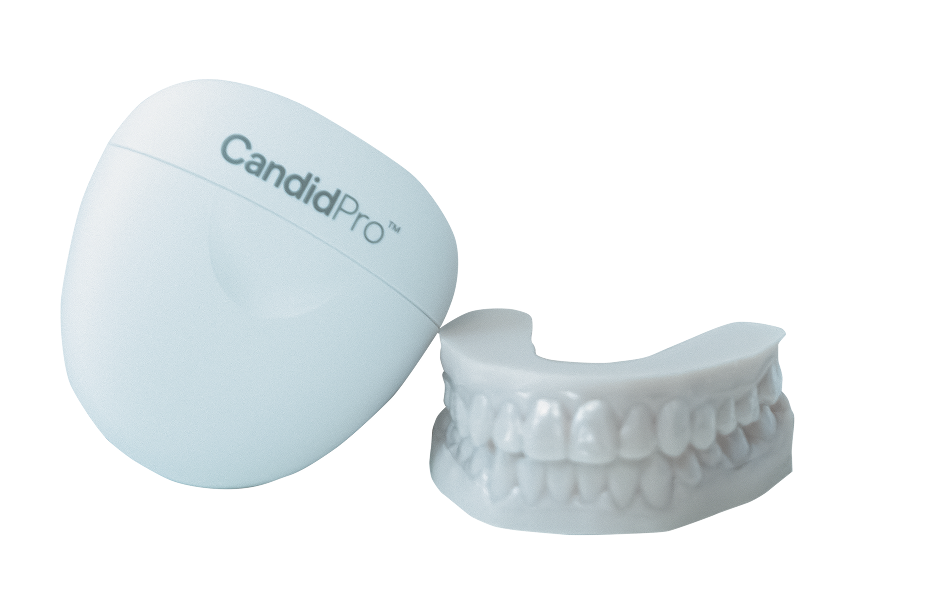
Custom trays are safer for repeated use than over-the-counter products because they are molded to fit your teeth precisely. This keeps the gel evenly distributed and off your gums, reducing the risk of irritation. Your dentist can adjust the concentration and wear time based on how your teeth respond. Professional teeth whitening trays from your dentist are always a better choice for ongoing maintenance than generic store-bought trays.
How Often Should You Use Whitening Strips?
You should use whitening strips no more than once or twice per year for full treatment cycles. Each cycle typically lasts 10 to 14 days of daily use. Using strips more frequently than the manufacturer recommends can increase sensitivity, cause gum irritation, and lead to uneven whitening because strips do not conform perfectly to the curves between teeth.
According to a 2020 systematic review cited by the ADA, whitening strips had greater efficacy than whitening toothpastes but were less effective than professional treatments. Strips use 3% to 10% hydrogen peroxide, which is significantly weaker than what your dentist uses. This lower concentration means strips are safer for more frequent use than in-office bleaching, but they still carry risks if overused.
If you find yourself reaching for whitening strips every month, that is a sign you may need a stronger professional treatment to get the baseline shade you want. Once you are at your desired shade, occasional strip use every four to six months for maintenance is generally safe. Patients in Hialeah who want reliable guidance on strip use should consult with their dentist to create a safe schedule.
Safe Whitening Frequency by Treatment Type
Whitening MethodSafe Full Treatment FrequencyTouch-Up FrequencyWho Should SuperviseProfessional In-Office BleachingOnce every 6 to 12 monthsN/A (use take-home trays for touch-ups)Dentist (required)Custom Take-Home Trays (from dentist)Initial cycle: once per yearEvery 3 to 6 months (a few days each)Dentist-prescribedOver-the-Counter Whitening Strips1 to 2 full cycles per yearEvery 4 to 6 monthsSelf-directed (follow instructions)Whitening ToothpasteSafe for daily useOngoing as part of daily routineSelf-directedWhitening PensEvery 2 to 3 monthsAs needed for minor touch-upsSelf-directed
Sources: American Dental Association, British Dental Journal, Journal of Evidence-Based Dental Practice, Cochrane Database of Systematic Reviews
What Factors Affect How Often You Should Whiten?
Several personal factors affect how often you should whiten your teeth. Your diet is the biggest one. Coffee, tea, red wine, berries, and tobacco are the primary causes of re-staining. Patients who consume these regularly see their brightness fade faster and may feel the urge to whiten more often. But whitening more frequently is not always the right solution. Adjusting habits, rinsing after dark beverages, and using a straw can extend your results and reduce the need for extra treatments.
Enamel thickness matters too. Patients with naturally thinner enamel or enamel that has been worn down by acid erosion, grinding, or aggressive brushing are more vulnerable to sensitivity and should space treatments further apart. A 2014 study published in the journal Operative Dentistry found that cracked or micro-abraded enamel allows peroxide to penetrate deeper, which increases discomfort.
Existing dental work also plays a role. Crowns, veneers, fillings, and bonding do not change color with whitening, so patients with visible restorations need to plan carefully. A cosmetic dentistry evaluation helps you build a whitening schedule that accounts for all of these factors.
How Your Oral Hygiene Routine Extends Whitening Results
Your oral hygiene routine extends whitening results by preventing new stains from forming and keeping your enamel strong. Brushing twice a day with fluoride toothpaste, flossing daily, and keeping up with dental cleanings every six months removes plaque and surface stain buildup before it sets in permanently. The better your daily habits, the less often you need to whiten.
According to the ADA, using a whitening toothpaste with the ADA Seal of Acceptance between treatments helps maintain brightness by removing surface stains through mild abrasives and low levels of peroxide. This is a safe daily option that does not carry the same risks as repeated bleaching treatments. Pairing it with good general dental care creates the strongest foundation for long-lasting results.
What Happens if You Whiten Your Teeth Too Often?
If you whiten your teeth too often, you risk weakening your enamel, increasing tooth sensitivity, causing chronic gum irritation, and giving your teeth a translucent, chalky, or blue-gray appearance. Enamel does not grow back once it is gone, so damage from over-whitening is permanent. A study published by the National Institutes of Health found that aggressive bleaching with high concentrations of hydrogen peroxide causes enamel softening, surface roughness, and an increase in the tooth's susceptibility to future damage.
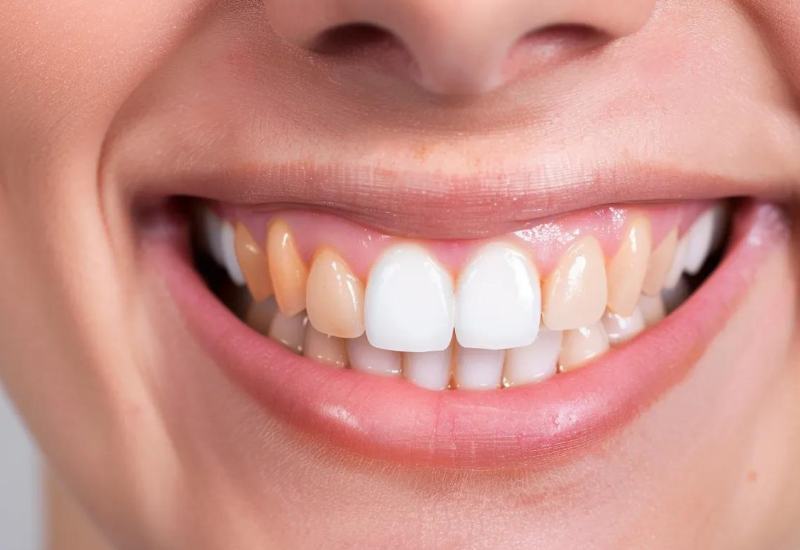
The warning signs of over-whitening include teeth that look see-through at the edges, persistent sensitivity to hot and cold that does not go away within 48 hours, gums that appear white, dry, or irritated after treatment, and teeth that seem to absorb stains faster than before. If you notice any of these symptoms, stop all whitening immediately and schedule a visit with your dentist.
Protecting the enamel you have is always more important than chasing an extra shade of white. Fluoride treatments can help strengthen enamel between whitening sessions, and a desensitizing toothpaste with potassium nitrate or stannous fluoride used for two weeks before each treatment reduces discomfort.
How Long Do Whitening Results Last?
Whitening results last anywhere from 6 months to 2 years or more, depending on the type of treatment and your daily habits. Professional in-office whitening generally lasts the longest because the concentration is higher and the application is precise. Patients who follow aftercare guidelines and schedule periodic touch-ups with take-home trays see the best long-term results.
According to a 2023 study published in the journal Medicina, at-home whitening trays and in-office treatments achieved similar whitening levels at six months post-treatment. This shows that consistent maintenance with custom trays can keep your smile just as bright as the day you left the dentist's chair. A Delta Dental 2024 survey found that 52% of adults rate tooth brightness as a top oral health priority, and keeping results lasting is a big part of that investment.
The patients who see their results fade fastest are those who go back to heavy coffee, tea, and red wine consumption without rinsing, skip dental cleanings, or use tobacco. Patients who limit staining substances and maintain preventive care routines see their brightness hold for a year or more between professional sessions.
How to Space Out Whitening Treatments Safely
You space out whitening treatments safely by starting with one professional in-office session, then shifting to take-home tray touch-ups every three to six months, and relying on good daily habits to carry you between treatments. This layered approach gives you the best of both methods: the dramatic initial lift of in-office bleaching and the convenience of at-home maintenance.
Your dentist can help you build a personalized whitening calendar based on your enamel condition, sensitivity history, diet, and goals. At our practice in South Florida, we create a plan for each patient so they know exactly when their next whitening session should happen and what to do in between. A whitening consultation is the first step to building that plan.
Is Whitening Toothpaste Safe to Use Every Day?
Yes, whitening toothpaste is safe to use every day as long as it is not overly abrasive and carries the ADA Seal of Acceptance. Whitening toothpastes work by using mild abrasives and low levels of peroxide to remove surface stains. They can lighten teeth by about one to two shades over time, according to the NIH. They do not carry the same risks as bleaching treatments because the active ingredient concentrations are much lower.
The key is choosing the right formula. Avoid ultra-abrasive whitening toothpastes that can wear down enamel with daily use. A toothpaste with fluoride provides the added benefit of remineralization, which strengthens enamel and reduces sensitivity. Whitening toothpaste is best used as a maintenance tool between professional treatments, not as a replacement for them.
Frequently Asked Questions
Can You Whiten Your Teeth Every Month?
No, you should not whiten your teeth every month with full bleaching treatments. Monthly whitening is too frequent for most patients and can lead to enamel thinning, chronic sensitivity, and gum irritation. Touch-ups with a low-concentration gel in custom trays may be acceptable for some patients under dental supervision, but full treatment cycles should be spaced at least three to six months apart. According to the British Dental Journal, sensitivity increases with both higher concentrations and greater frequency of use.
Does Whitening Weaken Enamel Over Time?
Whitening can weaken enamel over time if treatments are done too frequently or if products are used incorrectly. A study published by the NIH found that aggressive bleaching causes enamel softening and surface roughness. However, when whitening is done at safe intervals under dental supervision, saliva naturally remineralizes the enamel between sessions, and no permanent damage occurs.
How Do You Know When It Is Safe to Whiten Again?
You know it is safe to whiten again when your teeth have no lingering sensitivity, your gums are healthy, and the recommended time interval since your last treatment has passed. If you experienced sensitivity during your last session, wait until it has fully resolved before scheduling another treatment. Your dentist can evaluate your enamel and tell you exactly when your next session should be.
Can You Use Whitening Strips Between Professional Treatments?
Yes, you can use whitening strips between professional treatments for minor maintenance, but use them sparingly. One full strip cycle every four to six months is generally safe. Using strips too often on top of professional treatments compounds the peroxide exposure and increases the risk of sensitivity. Custom take-home trays from your dentist are a safer and more effective maintenance option than over-the-counter strips.
Should You Get a Dental Cleaning Before Whitening?
Yes, you should get a dental cleaning before whitening. A teeth cleaning removes plaque, tartar, and surface stains that can block the whitening gel from reaching your enamel evenly. Starting with clean teeth gives you better, more consistent whitening results and reduces the chance of needing to whiten again sooner.
Does Smoking Affect How Often You Need to Whiten?
Yes, smoking significantly affects how often you need to whiten because tobacco causes rapid and deep re-staining. Smokers see their whitening results fade much faster than non-smokers and may feel the need to whiten more often. However, whitening more frequently to counteract smoking damage puts your enamel at risk. The better long-term solution is quitting tobacco, which protects both your whitening investment and your overall oral health. According to the CDC, tobacco use remains one of the leading causes of oral health problems in the United States.
Does Whitening Work on Crowns or Fillings?
No, whitening does not work on crowns, fillings, veneers, or any dental restorations. These materials do not respond to peroxide-based bleaching agents. If you have restorations on visible teeth, your dentist can plan a coordinated approach. Porcelain veneers or new crowns can be matched to your whitened shade after treatment for a uniform result.
What It All Comes Down To
The safe frequency for teeth whitening depends on the method you use, your enamel health, your diet, and how well you maintain your results between treatments. Professional in-office whitening is best done once every 6 to 12 months. Custom take-home trays can be used for touch-ups every 3 to 6 months. Over-the-counter strips and toothpastes fill in the gaps for daily maintenance. The key is working with a dentist who monitors your enamel, adjusts your schedule based on how your teeth respond, and keeps you on a plan that protects your smile long-term.
Castellanos Dental Aesthetics has over 25 years of experience helping patients across South Florida build safe, effective whitening plans. If you want to know exactly how often you should be whitening, call (305) 820-4080 to schedule a consultation.
.png)
.png)

.png)


.png)

.png)
.png)
.png)
.png)

.png)
.png)
.svg)


