.png)
.svg)
.png)

Most Painful Invisalign Week
.png)
.png)
The most painful Invisalign week is almost always the very first week of treatment. This is when your teeth feel the strongest pressure because they are adjusting to the aligners for the first time. According to a study published in Progress in Orthodontics, pain from Invisalign peaks around 24 hours after the aligners are placed and drops back to near-normal levels within five to seven days. The good news is that each new tray gets easier as your mouth adapts to the process.
In this article, we explain exactly why week one hurts the most, what kind of discomfort to expect day by day, how Invisalign pain compares to braces, and simple ways to feel better fast. We also answer many of the questions patients ask us every day about aligner soreness, tray changes, and long-term comfort.
What Is the Hardest Week of Invisalign?
The hardest week of Invisalign is the first week. Your teeth, gums, and jaw are all experiencing a new type of pressure for the first time. The aligners fit snugly against your teeth and push them gently into new positions. That push creates soreness. Research published in the Journal of Oral Rehabilitation confirms that orthodontic pain begins two to four hours after an appliance is placed, peaks at 24 to 48 hours, and gradually returns to baseline within five to seven days.
A study cited by Healthline found that 54% of Invisalign patients reported mild pain, while 35% reported no pain at all. That means the majority of people either feel only light soreness or feel nothing. The 11% who reported moderate discomfort still said it was manageable and short-lived.
After week one, your body starts to adapt. Each time you switch to a new tray, the soreness comes back for a day or two, but it is almost always less intense than that initial week. Your clear aligners are doing their job, and the discomfort is proof that your teeth are moving into better alignment.
What Week Does Invisalign Start to Hurt?
Invisalign starts to hurt within the first few hours of wearing your very first set of trays. Most patients notice tightness and pressure within six to twelve hours of putting in their aligners. According to a study published in the National Institutes of Health (PMC), orthodontic pain typically begins two to twelve hours after treatment starts and peaks at around 24 hours.
The discomfort is not sharp or stabbing. Patients describe it as a squeezing or pressing feeling on the teeth. Some people also feel tenderness in the gums, and a few experience mild jaw aching. All of these sensations are normal and are a sign that the aligners are working.
By day three or four, most patients say the worst is behind them. By the end of the first week, many barely notice the trays at all. A study published in PubMed found that 83% of Invisalign patients got used to their aligners within one week.
Which Tray of Invisalign Hurts the Most?
The first tray of Invisalign hurts the most for nearly all patients. This is because tray number one is when your teeth experience aligner pressure for the very first time. Your periodontal ligaments, the tiny fibers that hold your teeth in the bone, are not yet used to being compressed and stretched.
After the first tray, every new set of aligners brings a brief return of mild soreness. However, the intensity decreases with each switch. A randomized trial published in the Angle Orthodontist found that discomfort after initial aligner delivery was consistently higher than discomfort after later adjustments. Patients in the traditional braces group reported even greater pain, showing that Invisalign is the more comfortable option overall.
Some patients also notice a spike in discomfort during the middle or later stages of treatment if a particular tray moves a stubborn tooth. But even then, the pain is usually a 2 or 3 on a scale of 1 to 10, compared to a 4 to 6 during week one. We see this pattern often at our practice in Hialeah, Florida, and we always reassure patients that it gets easier.
Invisalign Pain Timeline: Day by Day During Week One
What Does Invisalign Pain Feel Like on Day 1?
Invisalign pain on day 1 feels like tight pressure on your teeth, as if they are being gently squeezed from all sides. You might also feel soreness in your gums where the aligner edges sit. According to research published in the Journal of Clinical Medicine, the acute phase of orthodontic pain begins within the first 24 hours due to compression of the periodontal ligament and the release of inflammatory molecules. This is your body's natural response to the new force on your teeth.
Your cheeks and lips may also feel slightly irritated by the plastic. This goes away quickly as the soft tissues in your mouth toughen up. A good tip is to switch to your new trays at night so you sleep through the first few hours of adjustment.
What Happens on Days 2 and 3?
Days 2 and 3 are usually the peak of discomfort during the first week. The pressure on your teeth is at its highest point. You may feel tenderness when biting down. The study in Progress in Orthodontics confirms that pain typically peaks at 24 hours and stays elevated on day two before dropping on day three. Eating softer foods during these two days makes a big difference.
Some patients also report a slight lisp when they first start talking with aligners in. This is completely normal and usually disappears within a few days as your tongue adjusts. Patients who need other dental work, like a tooth-colored filling, should talk to their dentist about timing those treatments around aligner changes.
What Happens on Days 4 Through 7?
By day 4, most patients feel a noticeable drop in discomfort. The teeth have begun to settle into their new positions, and the aligner no longer feels as tight. By day 5, the study in Progress in Orthodontics found that pain had returned to near-baseline levels for Invisalign patients. Days 6 and 7 feel almost normal for most people.
This pattern repeats with every new tray, but the first few days of each subsequent tray are milder than week one. Your body learns what to expect, and the ligaments adapt faster over time.
Why Do People Quit Invisalign?
People quit Invisalign most often because of the strict daily wear requirement, not because of pain. Patients must keep their aligners in for 20 to 22 hours every day. That leaves only two to four hours total for eating, drinking anything other than water, and brushing. According to Align Technology, the maker of Invisalign, over 22 million patients have been treated worldwide as of 2025, and the vast majority complete their treatment successfully.
However, a 2023 study published in the American Journal of Orthodontics and Dentofacial Orthopedics found that about 17.2% of Invisalign patients switched to traditional braces to finish their treatment. This switch usually happens because the case was more complex than originally expected, not because the patient gave up. Many adults in the West Hialeah area start Invisalign later in life and finish with great results.
Adults getting aligners is more common now than ever before, and the success rates keep climbing.
Skipping wear time is one of the biggest causes of extra pain and slower results. When you do not wear your trays enough, your teeth start to drift back. Then the next tray feels tighter and more uncomfortable than it should. Consistency is the single best thing you can do for both comfort and results. Regular dental exams during treatment help your dentist track your progress and catch any issues early.
What Is the Biggest Complaint About Invisalign?
The biggest complaint about Invisalign is discomfort while chewing, especially during the first few days of a new tray. A study published in PubMed found that 44% of patients reported difficulty chewing as their main issue. The teeth are sensitive to biting pressure because the periodontal ligaments are inflamed from the force being applied.
Other common complaints include having to remove the trays every time you eat or drink, increased saliva production in the first few days, and the discipline required to wear aligners for at least 20 hours a day. These are all temporary adjustments that become second nature after the first couple of weeks.
Despite these complaints, patient satisfaction with Invisalign remains high. According to data compiled from clinical comparisons, Invisalign patients gave an average aesthetics satisfaction score of 8.7 out of 10 and a comfort score of 8.2 out of 10, both higher than traditional braces.
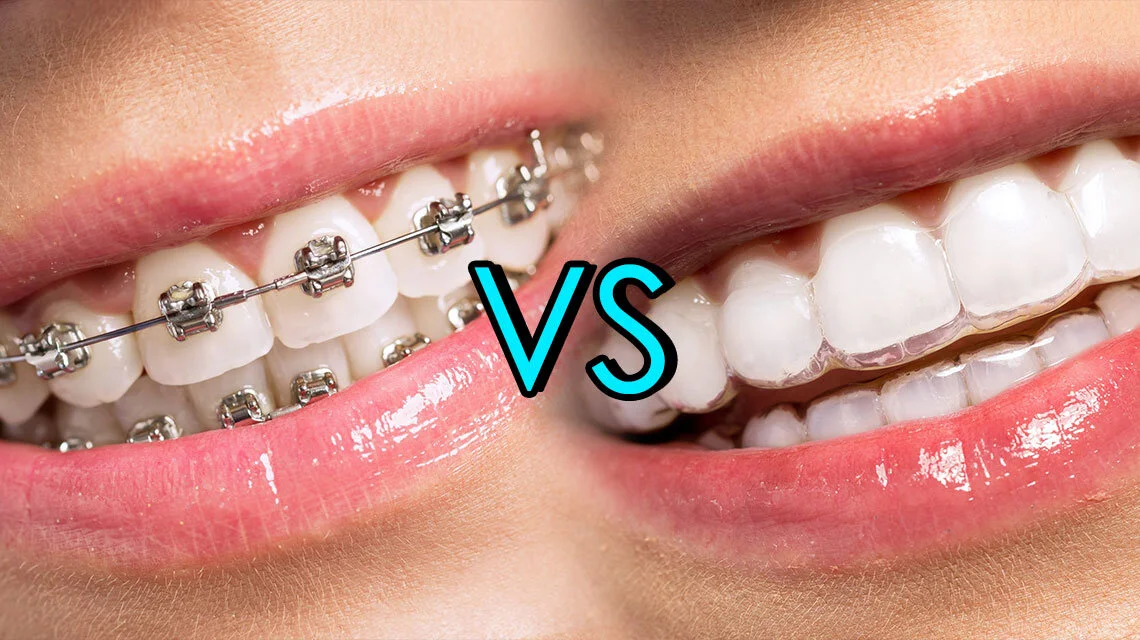
Does Invisalign Hurt More Than Braces?
No, Invisalign does not hurt more than braces. In fact, multiple studies show the opposite. A randomized prospective trial published in the Angle Orthodontist found that patients with traditional fixed braces reported significantly greater discomfort than Invisalign patients during the first week of treatment. The braces group also took more pain medication, especially on day two.
Traditional braces cause pain from metal brackets rubbing against the cheeks and gums, wire pokes, and the force of tightening. Invisalign uses smooth plastic with no sharp edges. The pain from Invisalign is mostly a dull pressure on the teeth, while braces often cause sharper, more localized irritation.
One early study found that braces were about 25% more painful than Invisalign during the first week. For patients considering their options, we have a helpful article that covers braces vs. clear aligners in detail.
How to Manage Invisalign Pain During the First Week
Can Over-the-Counter Pain Relievers Help With Invisalign Discomfort?
Yes, over-the-counter pain relievers can help with Invisalign discomfort. Acetaminophen (Tylenol) is the safest choice because it does not interfere with tooth movement. A review published in PMC noted that ibuprofen can lower pain at two and six hours after an orthodontic adjustment but may slow down the bone remodeling process that moves your teeth. Many orthodontists recommend acetaminophen over ibuprofen for this reason.
Taking a dose about 30 minutes before switching to a new tray can help you get ahead of the soreness. This is sometimes called pre-emptive analgesia, and studies have shown it can reduce peak pain levels.
What Soft Foods Should You Eat During the First Week?
During the first week of Invisalign, stick to foods that do not require much chewing. Good options include yogurt, scrambled eggs, mashed potatoes, soup, smoothies, oatmeal, and soft pasta. Avoid crunchy, hard, or chewy foods like nuts, raw carrots, crusty bread, and sticky candy. These foods put extra biting pressure on teeth that are already sore.
Remember that you must remove your aligners every time you eat. After eating, brush your teeth before putting the trays back in. Keeping your mouth clean helps prevent irritation and keeps the teeth cleaning process simple during treatment.

Does Switching Trays at Night Reduce Invisalign Pain?
Yes, switching trays at night reduces Invisalign pain because you sleep through the first several hours of peak discomfort. By the time you wake up, the sharpest part of the adjustment is already behind you. Many dentists recommend this simple strategy, and we suggest it to our own patients as well.
Using orthodontic wax on any aligner edges that rub against your gums or cheeks can also help. Cold compresses applied to the outside of the jaw for 10 to 15 minutes can reduce inflammation and numb the area.
How Quickly Do Teeth Shift Back After Invisalign?
Teeth can start to shift back within just a few days after finishing Invisalign if you do not wear a retainer. The bone and ligaments around your teeth are still soft and flexible right after treatment ends. According to the Cleveland Clinic, it can take nine to twelve months for enough new bone to form and firmly hold teeth in their new positions.
The American Association of Orthodontists recommends wearing retainers full-time for the first several months after treatment and then switching to nighttime wear. Many orthodontists advise wearing a nighttime retainer indefinitely to protect your results. Skipping even a few days can allow minor movement to begin, especially with teeth that needed the most correction during treatment.
If you ever feel your retainer getting tighter after skipping a night or two, that is a sign your teeth have already started to move. Do not ignore it. Get back on track right away. Adult orthodontics patients especially need to stay committed to retention because adult ligaments tend to be stiffer and slower to stabilize.
How Many Trays Is a Typical Invisalign Treatment?
A typical Invisalign treatment uses anywhere from 20 to 30 trays for mild to moderate cases. More complex cases can require 40 trays or more. Each tray is worn for about one to two weeks before switching to the next one, depending on the treatment plan. According to Align Technology, the average Invisalign treatment lasts 12 to 18 months, though some straightforward cases finish in as few as 6 months.
About 72% of Invisalign patients need additional refinement trays after the initial set is complete, according to industry data. These refinement trays make small final adjustments to get everything lined up perfectly. They tend to cause less discomfort than the earlier trays because the movements are smaller.
The number of trays you need depends on how much your teeth need to move. A patient with minor crowding will use far fewer trays than someone with a significant overbite. Your dentist will give you a clear treatment plan with an estimated number of trays and timeline during your initial orthodontic consultation.
Does Anyone Ever Finish Invisalign Early?
Yes, some patients do finish Invisalign early, but it is not common. Finishing early usually happens when a patient wears their aligners for 22 hours a day consistently and their teeth respond to treatment faster than expected. According to Align Technology, the system has an 88% success rate for mild to moderate cases, and some of those patients track ahead of schedule.
On the other hand, patients who do not wear their trays enough can fall behind and need extra time. The key to staying on track, or even getting ahead, is wearing your aligners as close to 22 hours a day as possible. The more consistently you wear them, the faster your teeth settle into each new position, and the sooner you move on to the next tray. The full Invisalign timeline depends on your specific case and compliance.
Patients who want to complement their Invisalign results with other cosmetic improvements sometimes consider teeth whitening once treatment is done. Straighter, whiter teeth together can create a dramatic transformation.
Invisalign Pain Comparison Table: Week by Week
Time PeriodPain Level (1-10 Scale)Common SensationsHow Long It LastsWeek 1 (First Tray)4-6Tight pressure, gum tenderness, mild jaw achePeaks at 24-48 hours, fades by day 5-7Week 2 (Second Tray)3-4Mild tightness, slight chewing sensitivity1-3 days after switching traysWeeks 3-42-3Brief pressure when switching trays1-2 days per new trayMid-Treatment1-2Minimal pressure, mostly during tray changesLess than 24 hours per tray changeFinal Trays / Refinements1-3Occasional spike if a stubborn tooth is adjusted1-2 days if it occurs
Sources: Progress in Orthodontics (2014), Angle Orthodontist randomized trial, PubMed patient surveys, clinical patient reports.
What Is the Hardest Tooth to Move With Invisalign?
The hardest tooth to move with Invisalign is usually a canine tooth that needs significant rotation. Canines have the longest roots of any teeth in the mouth, which means they are anchored deep in the bone and resist movement more than other teeth. Research published in ScienceDirect notes that clear aligner therapy tends to produce less accurate results for rotational and vertical tooth movements compared to traditional braces.
Lower premolars that need to be uprighted and teeth that need to be moved vertically (pushed up or pulled down) are also challenging for aligners. In some cases, small tooth-colored attachments are bonded to the teeth to give the aligners extra grip. These attachments help the aligner apply force in the right direction.
If a stubborn tooth is being moved on a particular tray, you may feel more soreness from that tray than from others. This is normal and does not mean something is wrong. It just means that tooth is getting the extra push it needs. Your dentist monitors these movements at every checkup to make sure everything is on track.
Do You Change Invisalign Trays Every Week?
Some patients change Invisalign trays every week, while others change them every two weeks. The schedule depends on your treatment plan and how your teeth respond. Traditionally, Invisalign trays were changed every two weeks. With newer aligner materials like Align Technology's SmartTrack, many dentists now prescribe weekly changes because the material applies a more consistent, gentle force.
Your dentist decides the right schedule based on the complexity of your case, your age, and how well your teeth are tracking with each tray. Never switch trays faster than your dentist recommends. Changing too early can cause extra pain and may prevent your teeth from fully settling into the right position before moving on.
Keeping your overall oral health strong during Invisalign treatment is important. Healthy gums and clean teeth respond better to aligner pressure and heal faster between tray changes.
Can Invisalign Fix TMJ Issues?
Invisalign can sometimes help with TMJ issues, but it is not specifically designed to treat TMJ disorders. If your TMJ pain is caused by a misaligned bite, straightening your teeth with Invisalign may improve your bite alignment and reduce stress on the jaw joint. However, if your TMJ problems are caused by muscle tension, teeth grinding, or arthritis in the joint itself, Invisalign alone will not fix it.
A study published in PubMed found that 8% of Invisalign patients reported clicking in the jaw during treatment, though this clicking had existed before treatment started. None of the patients in the study developed new TMJ pain from wearing aligners.
If you have TMJ concerns, bring them up during your consultation. Your dentist can evaluate whether Invisalign will help, make things worse, or have no effect on your jaw symptoms. In some cases, a combination of clear aligner therapy and a custom night guard produces the best results.
Is Invisalign Weaker Than Braces?
Invisalign is not weaker than braces, but it does have different strengths. Invisalign works best for mild to moderate alignment issues, including gaps, crowding, and minor bite problems. According to clinical research, Invisalign achieves an 88% success rate for these cases, while traditional braces achieve about 90%. The difference is only two percentage points.
Where braces have an advantage is in severe and complex cases. Deep overbites, large tooth rotations, and significant jaw discrepancies are still handled more effectively with brackets and wires because they give the dentist more direct control. For everything else, Invisalign is just as effective and more comfortable. A cosmetic dentistry consultation can help determine which option suits your specific needs.
Frequently Asked Questions
How Long Does Invisalign Hurt After Switching Trays?
Invisalign hurts for about one to three days after switching trays. The soreness is strongest in the first 24 to 48 hours as the teeth adjust to the new pressure. By day three, most patients feel comfortable again. According to a study in Progress in Orthodontics, pain returns to near-baseline levels within five days of a tray change.
Can You Sleep With Invisalign In?
Yes, you can and should sleep with Invisalign in. The aligners need to stay in your mouth for 20 to 22 hours per day, and sleeping hours count toward that total. Some patients experience mild clenching during sleep in the first few nights, but this usually goes away as the mouth adapts.
Does Invisalign Pain Get Better Over Time?
Yes, Invisalign pain gets better over time. The first tray causes the most discomfort, and each new tray after that tends to feel less intense. A study published in the Angle Orthodontist confirmed that discomfort after later adjustments was consistently lower than after the initial aligner delivery. By mid-treatment, many patients barely notice new tray changes.
Is It Normal to Feel Pain in Just One Tooth With Invisalign?
Yes, it is normal to feel pain in just one tooth with Invisalign. This happens when a specific tooth is being moved more than the others on a particular tray. The targeted pressure on that tooth creates localized soreness. According to Healthline, this is a sign the aligners are working and the discomfort should go away within a few days.
Can Invisalign Cause Headaches?
Yes, Invisalign can cause headaches, especially during the first few days of treatment or after switching to a new tray. The pressure on the teeth and jaw can radiate to the head. A study published in the Journal of Oral Rehabilitation found that 24.6% of orthodontic patients reported headaches during treatment. These headaches are usually mild and temporary.
How Many Hours a Day Should You Wear Invisalign?
You should wear Invisalign for 20 to 22 hours a day. The only times you should remove the aligners are when eating, drinking anything other than water, and brushing or flossing. Wearing them less than 20 hours a day can slow down treatment, cause extra pain when the trays do not fit properly, and lead to results that fall short of the plan.
Putting It All Together
The most painful week of Invisalign is the first one. Pain peaks around 24 to 48 hours after you put in your first set of trays and drops off steadily by day five. After that first week, every new tray change brings a brief return of mild soreness that lasts one to three days, but it gets easier each time. Studies consistently show that over half of patients report only mild discomfort, and more than a third feel no pain at all.
Staying consistent with your wear time, switching trays at night, eating soft foods for the first couple of days, and using acetaminophen when needed are the simplest ways to keep yourself comfortable. The short-term soreness is well worth the long-term reward of a straighter, healthier smile.
If you are thinking about Invisalign or have questions about what to expect, we are happy to help at Castellanos Dental.
Give us a call at 305-820-4080 to schedule a consultation and get started on the path to a smile you love.
.png)
.png)

.png)


.png)

.png)
.png)
.png)

.png)
.png)
.svg)


