.png)
.svg)
.png)

Managing Pain During Tough Invisalign Days
.png)
.png)
Managing pain during tough Invisalign days comes down to a few simple strategies that work fast. Cold compresses, warm salt water rinses, soft foods, over-the-counter pain relievers, and consistent aligner wear are the most effective ways to get through the soreness. According to a study published in PubMed, 54% of Invisalign patients experience only mild pain, and 83% get fully used to their aligners within one week.
In this article, we walk through every proven method for handling Invisalign discomfort, explain why certain days feel harder than others, cover what to do if the pain feels unbearable, and answer the most common questions patients have about staying comfortable during treatment.
What to Do if Invisalign Pain Is Unbearable
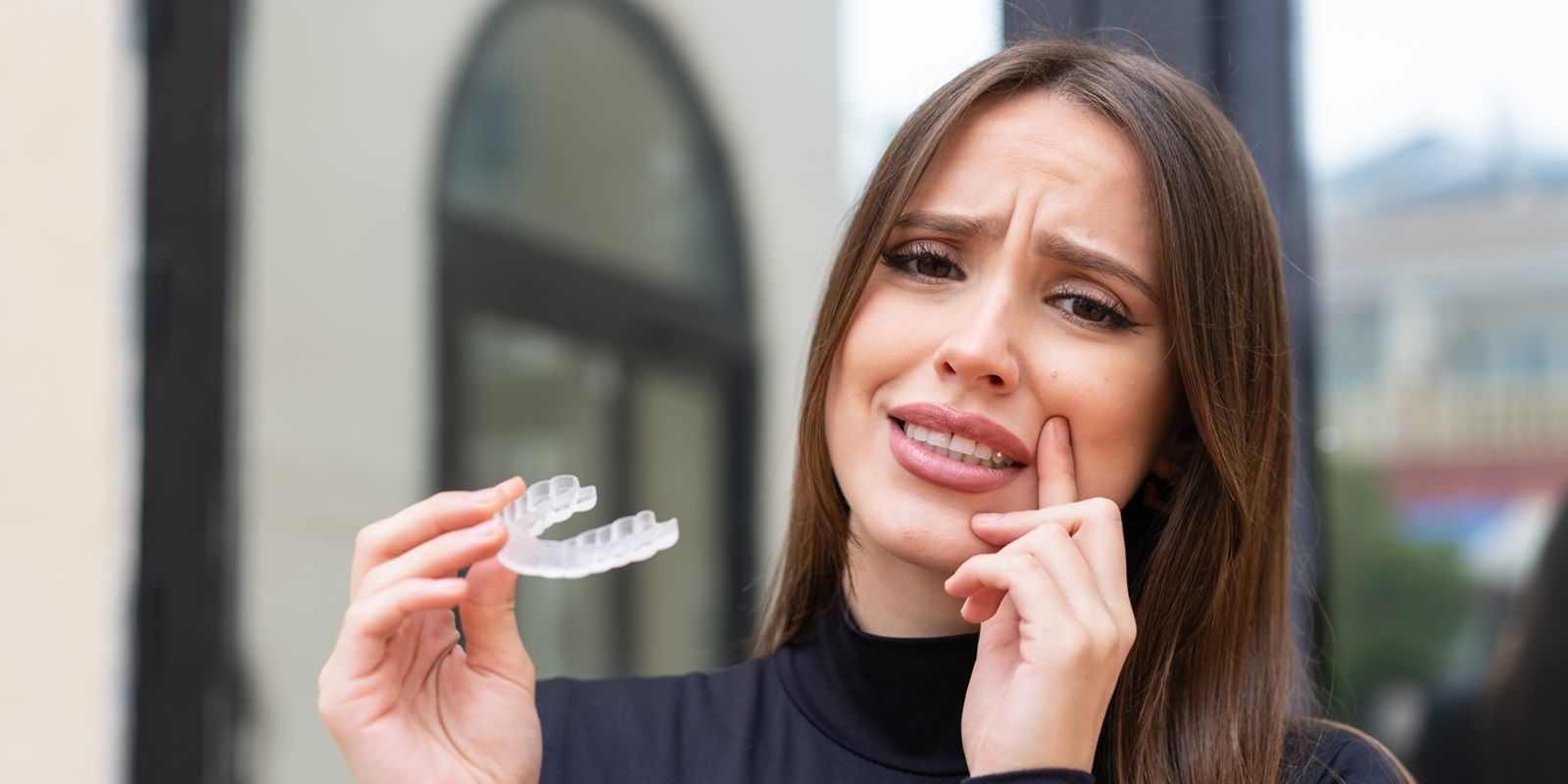
If Invisalign pain feels unbearable, the first thing to do is check whether your aligner is seated correctly. An aligner that is not fully snapped into place can pull teeth in the wrong direction and create unnecessary soreness. Gently bite down on aligner chewies to seat the tray firmly against your teeth. This alone fixes the problem for many patients.
If the tray is seated properly and the pain is still intense, try a cold compress on the outside of your cheek for 10 to 15 minutes. Take acetaminophen as directed on the package. Rinse your mouth with warm salt water to calm the gum inflammation. A study published in Clinical Oral Investigations found that salt water rinses are just as effective as chlorhexidine mouthwash at reducing oral inflammation after dental procedures.
If the pain does not improve within a few days, or if you notice a sharp, localized burning sensation on your gums, contact your dentist right away. Persistent sharp pain could mean the aligner has a rough edge that needs smoothing, an attachment is irritating your cheek, or there is an underlying issue like a cavity or gum disease. Normal Invisalign discomfort is a dull, constant pressure. It should never feel like a stabbing or burning sensation. A routine dental exam before starting treatment helps catch potential problems early.
Why Some Invisalign Days Feel Harder Than Others
What Is the Hardest Week of Invisalign?
The hardest week of Invisalign is the first week of treatment. Your teeth, gums, and jaw are experiencing aligner pressure for the very first time. According to a study published in Progress in Orthodontics, orthodontic pain peaks at 24 hours after an appliance is placed and returns to near-baseline levels within five to seven days. The first tray creates the strongest sensation because your periodontal ligaments have never been compressed by an aligner before.
After week one, every tray change brings back a brief period of soreness. But it is almost always lighter than what you felt during that first week. Your body learns to adapt faster, and the ligaments become more flexible over time.
Why Does Pain Spike Every Time You Switch Trays?
Pain spikes every time you switch trays because each new aligner applies a fresh round of pressure to move your teeth a little further. According to research published in the Journal of Clinical Medicine, the acute phase of orthodontic pain lasts 24 to 72 hours and is caused by inflammation in the periodontal ligament. After that acute phase, your body enters an adaptation phase where the inflammation calms down and the bone begins to remodel. That is why you feel better by day three or four of each new tray.
Patients who wear their clear aligners consistently for 20 to 22 hours a day tend to have shorter, milder pain spikes. Patients who take their trays out too often allow their teeth to drift back slightly, which makes the next time they put the aligner in feel tighter and more painful.
Does Invisalign Hurt More at Night?
Invisalign can feel like it hurts more at night because you have fewer distractions. During the day, your brain is busy with work, conversations, and activities, so you notice the pressure less. At night, when everything is quiet, the sensation becomes more obvious. Some patients also clench their jaw during sleep, which adds extra pressure on teeth that are already sore from the aligners.
If nighttime pain is a problem, try taking acetaminophen about 30 minutes before bed. A cold compress on the jaw for 10 minutes before you lie down can also help numb the area. Patients who grind their teeth may benefit from talking to their dentist about whether a night guard can be used alongside their aligners in the future.
Proven Ways to Manage Invisalign Pain at Home
How Do Cold Compresses Help With Invisalign Soreness?
Cold compresses help with Invisalign soreness by constricting blood vessels in the area, which reduces swelling and numbs the pain. This is the same science behind icing a sprained ankle. Wrap ice or a cold pack in a thin cloth and hold it against the outside of your cheek for 10 to 15 minutes at a time. Do not place ice directly on your skin. You can repeat this several times a day during the first 48 hours of a new tray.
Another simple trick is sucking on ice cubes with your aligners still in. The cold numbs the sore spots from the inside. Just do not chew the ice, because biting down on something hard when your teeth are already sensitive can make things worse.
Does Salt Water Help With Invisalign Pain?
Yes, salt water helps with Invisalign pain by reducing inflammation in the gums and promoting healing. A study published in PLOS ONE found that rinsing with a salt water solution stimulates gum tissue repair and speeds wound healing in the mouth. To make a salt water rinse, mix one teaspoon of salt into a cup of warm water. Swish it gently around your mouth for 30 seconds and spit it out. You can do this two to three times a day.
Salt water rinses are especially helpful during the first few days of a new tray, when gum irritation is at its highest. The Journal of Indian Society of Pedodontics and Preventive Dentistry also found that salt water rinses effectively reduce plaque when used alongside regular brushing and flossing. Keeping your mouth clean during Invisalign treatment prevents additional irritation and helps the gums stay healthy. Scheduling regular teeth cleanings during treatment supports this even further.
Which Pain Reliever Is Best for Invisalign Discomfort?
Acetaminophen (Tylenol) is the best pain reliever for Invisalign discomfort because it blocks pain signals without interfering with the tooth movement process. A review published in PMC noted that ibuprofen can lower pain at two and six hours after an orthodontic adjustment but may slow down bone remodeling, which is the process your body uses to move teeth into new positions. Some dental professionals caution against using ibuprofen during aligner treatment for this reason.
If you tend to feel pain every time you switch trays, taking acetaminophen about 30 to 60 minutes before putting in the new tray can help you stay ahead of the soreness. This is called pre-emptive pain management, and multiple studies support its effectiveness for orthodontic patients.
Can Orthodontic Wax Help With Invisalign Irritation?
Yes, orthodontic wax can help with Invisalign irritation by creating a smooth barrier between the aligner edge and the soft tissues of your mouth. If a specific spot on the tray is rubbing against your gums or cheeks and creating a sore, pinch off a small piece of wax, roll it into a ball, and press it onto the irritating edge. Replace the wax as needed throughout the day.
Most patients only need wax during the first week or two of treatment while the tissues inside the mouth toughen up. After that, the cheeks and gums adapt to the feel of the plastic, and irritation stops being a problem. If one spot keeps causing pain even after your mouth has had time to adjust, let your dentist know. The aligner may have a small burr or rough edge that can be smoothed down in a quick visit.
How Your Daily Habits Affect Invisalign Comfort
Does Wearing Aligners More Hours Per Day Reduce Pain?
Yes, wearing aligners more hours per day reduces pain because your teeth stay in the position the aligner is pushing them toward. Every time you remove your trays, your teeth begin to drift slightly back. When you put the trays back in, they feel tighter because they have to push the teeth into the correct position again. This back-and-forth creates more soreness.
Align Technology, the maker of Invisalign, recommends wearing aligners for 20 to 22 hours a day. Patients who stick to 22 hours consistently tend to report less discomfort than patients who wear them for only 18 to 20 hours. The two extra hours make a real difference. According to Align Technology, over 22 million patients have been treated with the Invisalign system worldwide as of 2025, and the patients who follow the wear schedule most closely tend to have the smoothest experience.
What Should You Eat During Tough Invisalign Days?
During tough Invisalign days, stick to soft foods that do not require much biting or chewing. Good choices include yogurt, scrambled eggs, mashed potatoes, soup, oatmeal, smoothies, soft pasta, bananas, and steamed vegetables. Avoid crunchy, hard, or chewy foods like nuts, raw carrots, popcorn, crusty bread, and chewy candy. These put extra biting pressure on teeth that are already sore.
The first two to three days after a tray change are the most important time to go easy on your teeth. After that, you can gradually return to your normal diet. Remember to always remove your aligners before eating, and brush your teeth before putting them back in. A healthy diet during treatment also supports overall oral health, which helps your gums respond better to the aligner pressure.
Should You Switch Invisalign Trays at Night or in the Morning?
You should switch Invisalign trays at night, right before bed. Switching at night lets you sleep through the first several hours of peak discomfort. Research shows that orthodontic pain peaks at around 24 hours after a new appliance is placed. If you put your new tray in at 10 PM, you sleep through the first 8 hours of adjustment. By the time you wake up, the worst of it is already fading.
Many dentists recommend this strategy because it is simple and effective. Switching in the morning means you feel the peak soreness during the middle of your day, which can affect your focus and comfort at work or school. Nighttime switching is one of the easiest ways to make your clear aligner treatment more comfortable.
What Percentage of People Quit Invisalign?
The exact percentage of people who quit Invisalign is not widely published, but a 2023 study in the American Journal of Orthodontics and Dentofacial Orthopedics found that 17.2% of Invisalign patients switched to traditional braces to complete their treatment. This is not the same as quitting, since these patients continued orthodontic care with a different method. The switch was usually due to the complexity of the case, not because of pain.
Invisalign has an 88% success rate for mild to moderate cases, according to clinical data. Traditional braces have about a 90% success rate. The two-percentage-point difference is small, and most patients who follow their treatment plan finish successfully. Patients who do stop treatment early typically cite the daily wear commitment as the main reason, not pain. Wearing trays for 22 hours a day takes discipline, especially when eating out, traveling, or managing a busy schedule. Many patients combine Invisalign with other cosmetic dentistry treatments once their teeth are straight for a complete smile transformation.
Braces vs. clear aligners is a common comparison patients explore before starting, and knowing the pros and cons of each helps set realistic expectations.
How Invisalign Chewies Help With Pain and Fit
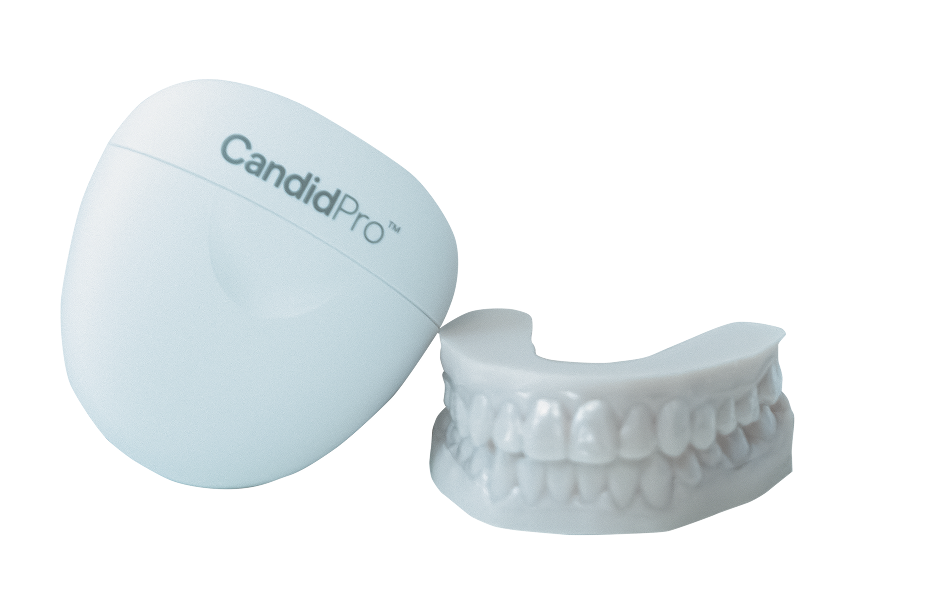
Invisalign chewies are small, soft cylinders made of a spongy material. You bite down on them for a few minutes after putting in your aligners to help the tray snap into its proper position. A well-seated aligner distributes pressure evenly across your teeth. A poorly seated aligner puts uneven pressure on certain spots, which causes more pain in those areas.
Many providers recommend using chewies every time you put your aligners back in after eating. The biting motion also promotes blood flow to the gums and periodontal ligaments, which can help reduce soreness and speed up the adjustment process. Think of it like gently stretching a stiff muscle. The movement helps your tissues adapt to the new position faster.
Chewies are inexpensive and easy to carry with you. Keeping a few in a travel kit along with a toothbrush, toothpaste, and floss makes it simple to care for your teeth and aligners when you are away from home.
Invisalign Pain Relief Methods Compared
Relief MethodHow It WorksBest ForResearch SupportCold CompressConstricts blood vessels, numbs the area, reduces swellingFirst 48 hours of a new trayWidely supported in clinical practice for reducing oral inflammationWarm Salt Water RinseReduces gum inflammation, promotes tissue healing, kills bacteriaGum soreness, soft tissue irritationPLOS ONE (2016): stimulates gum tissue repair; Clinical Oral Investigations (2021): as effective as chlorhexidine for reducing inflammationAcetaminophenBlocks pain signals in the brain without affecting tooth movementGeneral aligner soreness, pre-emptive use before tray changesPMC review: does not interfere with orthodontic bone remodelingOrthodontic WaxCreates a barrier between aligner edges and soft tissueCheek or gum irritation from rough aligner edgesStandard clinical recommendation by orthodontistsAligner ChewiesSeats aligner properly, promotes blood flow to gumsUneven pressure, poorly seated traysRecommended by Align Technology and orthodontic providersSwitching Trays at NightLets you sleep through peak discomfort hoursReducing daytime pain during tray transitionsProgress in Orthodontics: pain peaks at 24 hours, supports nighttime switching
Sources: PLOS ONE (2016), Clinical Oral Investigations (2021), Progress in Orthodontics (2014), PMC orthodontic pain reviews, Align Technology clinical guidelines.
When to Call Your Dentist About Invisalign Pain
Normal Invisalign discomfort is a dull, even pressure that fades within two to three days. But not all pain during treatment is normal. Contact your dentist if you experience any of the following: pain that lasts longer than one week after a tray change, a sharp or burning sensation on your gums or cheeks, a tooth that feels significantly loose (beyond a slight wiggle), visible swelling or bleeding in the gums that does not go away, or a tray that does not seem to fit at all.
These signs could indicate a problem with the tray itself, an issue with an attachment, gum disease, or a cavity that developed during treatment. Catching these problems early prevents bigger issues down the road. Patients who keep up with regular checkups and oral screenings during treatment are less likely to run into surprise complications.
A study published in the Angle Orthodontist found that discomfort after later aligner adjustments was consistently lower than after the initial delivery. So if pain is getting worse instead of better as your treatment goes on, that is a signal to contact your dentist rather than pushing through it.
How Long Does Invisalign Hurt After Switching Trays?
Invisalign hurts for about one to three days after switching trays. The soreness is strongest in the first 24 to 48 hours as the teeth adjust to the new pressure. By day three, most patients feel comfortable again. A study in Progress in Orthodontics found that pain returned to near-baseline levels within five days of a tray change. After the first few tray switches, many patients say they barely notice the transition at all.
The discomfort also depends on how much movement a particular tray is asking your teeth to make. Some trays move teeth very little and cause almost no soreness. Others move a stubborn tooth a larger amount and can feel more intense. The full Invisalign timeline varies from patient to patient based on the complexity of the case.
Patients in West Hialeah and nearby communities who want to stay on track with their treatment should keep every scheduled follow-up appointment. Regular visits let your dentist check that the trays are tracking properly and address any comfort concerns before they become bigger issues.
What Is the 30 Minute Rule for Invisalign?
The 30 minute rule for Invisalign means you should limit each meal or snack to about 30 minutes so your aligners spend as little time out of your mouth as possible. Invisalign requires 20 to 22 hours of daily wear, which leaves only two to four hours total for eating, drinking, and oral hygiene. If every meal stretches to 45 minutes or an hour, you quickly eat into your wear time.
Spending too much time with your trays out leads to two problems. First, your teeth start to shift slightly when the aligners are removed, which means the trays feel tighter and more painful when you put them back in. Second, reduced wear time slows down your overall treatment progress, which can mean more months in aligners and more total tray changes.
The 30 minute rule is not about rushing through meals. It is about being mindful of how long your aligners are out during the day. Planning your meals and snacks at set times helps you stay within the recommended wear window. If you need tooth-colored fillings or other dental work during treatment, your dentist can coordinate the timing so it does not disrupt your aligner schedule.
Can Adults Handle Invisalign Pain Differently Than Teens?
Adults and teens experience Invisalign pain differently due to biological factors. A study published in the Journal of Clinical Medicine found that younger patients (ages 18 to 24) reported slightly higher pain levels than older patients, though the difference was not statistically significant. Adults tend to have stiffer periodontal ligaments, which can mean slightly longer adjustment periods but also more stable tooth positions between tray changes.
The bigger difference is psychological. Adults are generally better at managing discomfort because they understand it is temporary and have more experience with pain management strategies. Teens may be more likely to remove their aligners when they feel sore, which actually makes the next insertion more painful. According to Align Technology, 84% of prospective teen patients prefer Invisalign over traditional braces, but maintaining the 22-hour daily wear requirement takes consistent effort regardless of age.
Adult orthodontics patients who are starting Invisalign later in life should know that the discomfort is temporary and very manageable with the right approach.
How to Keep Your Mouth Healthy During Invisalign Treatment
A healthy mouth handles Invisalign discomfort better than a mouth with existing problems. Gum disease, cavities, and plaque buildup all make aligner soreness worse because the tissues are already inflamed before the pressure even starts.
Brush your teeth at least twice a day with a soft-bristled toothbrush, and floss daily. Clean your aligners every time you remove them by rinsing them with lukewarm water and gently brushing them with a soft toothbrush. Avoid using hot water, which can warp the plastic and ruin the fit. Also avoid using toothpaste on your aligners, as it can scratch them and make them cloudy.
Drinking plenty of water throughout the day keeps your mouth moist, washes away bacteria, and reduces the risk of dry mouth, which can make aligner irritation worse. Stay on top of your regular dental visits during treatment. A professional teeth cleaning removes plaque buildup that your toothbrush cannot reach and keeps your gums in the best shape possible for aligner treatment.
Frequently Asked Questions
Can I Still Kiss With Invisalign?
Yes, you can still kiss with Invisalign. The aligners are thin, smooth, and nearly invisible. Most people cannot feel them during a kiss. Some patients feel slightly self-conscious at first, but the trays are far less noticeable than metal braces with brackets and wires.
Is 47 Trays a Lot for Invisalign?
47 trays is on the higher end but not unusual for Invisalign. Mild cases may need 20 to 30 trays, while moderate to complex cases can require 40 to 50 or more. According to Align Technology, the average treatment lasts 12 to 18 months, and about 72% of patients need additional refinement trays after the initial set.
Why Don't Some Dentists Like Invisalign?
Some dentists prefer traditional braces because braces give more direct control over complex tooth movements like large rotations and vertical shifts. Invisalign works best for mild to moderate cases. Clinical data shows Invisalign has an 88% success rate, compared to 90% for traditional braces. The gap is small, but for very complex cases, braces may still be the better tool.
How Many Trays Is 2 Years of Invisalign?
2 years of Invisalign is roughly 52 to 104 trays, depending on whether you switch trays every one or two weeks. Weekly tray changes mean about 104 trays over two years, while two-week changes mean about 52. The exact number depends on your treatment plan and how your teeth respond.
Can Invisalign Cause Headaches?
Yes, Invisalign can cause headaches, especially during the first few days of treatment or after switching to a new tray. A study published in the Journal of Oral Rehabilitation found that 24.6% of orthodontic patients reported headaches during treatment. The pressure from the aligners on the teeth and jaw can radiate to the head, but these headaches are usually mild and temporary.
Is It Normal to Feel Pain in Just One Tooth With Invisalign?
Yes, it is normal to feel pain in just one tooth with Invisalign. This happens when a single tooth is being moved more than the others on a particular tray. The targeted pressure creates localized soreness that is a sign the aligner is working. The discomfort should fade within a few days as the tooth settles into its new position.
The Takeaway
Tough Invisalign days are temporary. The worst of the discomfort happens during the first week of treatment and during the first 24 to 48 hours of each new tray. Studies consistently show that 54% of patients feel only mild pain, 35% feel no pain at all, and almost everyone adapts within the first week. Cold compresses, salt water rinses, soft foods, acetaminophen, orthodontic wax, and consistent wear time are the most effective tools for staying comfortable.
The key to a smooth experience is not avoiding pain entirely, because some pressure is a necessary part of moving your teeth. The key is knowing how to manage it so the discomfort never gets in the way of your daily life. We see patients at our Hialeah, Florida practice every day who are amazed at how quickly the tough days pass and how incredible their results look at the end.
If you are ready to start Invisalign or have questions about managing discomfort during treatment, we are here to help at Castellanos Dental.
Call us at 305-820-4080 to schedule your consultation.
.png)
.png)

.png)


.png)

.png)
.png)
.png)
.png)

.png)
.png)
.svg)


