.png)
.svg)
.png)

Long-Term Retainer Use After Invisalign
.png)
.png)
Long-term retainer use after Invisalign is a permanent commitment, not a temporary phase. Most providers recommend wearing your retainer full-time for the first 3 to 6 months after treatment, then transitioning to nightly wear for the rest of your life. This is not about your provider being overly cautious; it is about biology. Teeth have no permanent off switch for movement, and the only reliable tool for stopping them from drifting over time is consistent retainer use. This article explains exactly what long-term retainer wear looks like at each stage, which type of retainer works best for your situation, what can happen if you stop wearing one, and who can and cannot use Invisalign in the first place.
Do You Wear a Retainer Forever After Invisalign?
Yes, you wear a retainer for life after Invisalign, though how often you wear it changes significantly over time. The first 3 to 6 months require the most intensive wear, usually 20 to 22 hours per day. After that, most patients shift to nightly-only use. Some providers allow reducing to 3 to 5 nights per week after the first year or two, but the majority of orthodontists recommend nightly wear indefinitely to fully protect results.
The word "forever" sounds heavy, but in practical terms it simply means putting a clear tray in at bedtime. Most patients who build this habit report that it becomes second nature within a few weeks. The time investment is minimal. The alternative, allowing teeth to drift and then going through retreatment, is far more costly in both time and money. According to the American Association of Orthodontists (AAO), 1 in 3 orthodontic patients today is an adult, and adult orthodontic treatment has grown by more than 40 percent over the last decade. A significant portion of that growth consists of adults correcting relapse from earlier treatment where retainer use was not maintained. Learning from that pattern is valuable.
Here in the Hialeah area, we see many patients who completed clear aligner treatment years ago and are now addressing movement that happened because retainers were left behind. Protecting your results from the start is always the smarter path, and it costs almost nothing compared to starting over.
The Three Phases of Retainer Wear After Invisalign
Retainer use after Invisalign follows a predictable schedule that becomes progressively easier over time. Most providers use a three-phase approach to give teeth and surrounding bone the support they need at each stage of stabilization.
Phase 1: Full-Time Wear (Months 0 to 6)Right after your final Invisalign tray, retainers go in for 20 to 22 hours per day. You remove them only to eat, brush, floss, and clean the trays. This phase is the most important because the bone around your teeth is still rebuilding and hardening in its new position. Research published in Orthodontic Practice US found that collagenous fibers of the periodontal ligament take 4 to 6 months to fully remodel. This is why the first 6 months are the highest-risk period for relapse.
Phase 2: Nighttime-Only Wear (Months 6 to 24)Once your provider confirms that your teeth look stable, you transition to wearing your retainer only while you sleep. This is where most people settle into a long-term groove. The body continues to consolidate the new bone position during this phase, and nightly wear provides consistent, low-effort support without interfering with daily life at all.
Phase 3: Ongoing Maintenance (Year 2 and Beyond)After 1 to 2 years of nightly use, some providers allow reducing to 3 to 5 nights per week. Many orthodontists recommend continuing nightly wear for the best long-term protection. This is because teeth continue to be subject to natural age-related movement for the rest of your life, and even small gaps in retainer use can allow gradual drift over years. The minimal effort of wearing a retainer a few nights a week is a good trade for a lifetime of stable alignment.
It takes approximately 9 to 12 months for the jawbone to build up enough new bone tissue to stabilize teeth in their new positions. After that consolidation point, teeth will not move as dramatically as they would in the first months. However, as noted in a review published in PubMed, orthodontic clinicians should treat all patients as having a high potential for relapse, because the science cannot yet predict who will and will not experience significant movement over time. Consistent retainer use is the only reliable hedge against that uncertainty.

What Are the Options for Retainers After Invisalign?
The options for retainers after Invisalign are clear removable retainers (Essix or Vivera), Hawley retainers, and fixed lingual retainers. Each has a different set of strengths, and some patients use a combination of two types for the best long-term protection.
Clear Removable Retainers
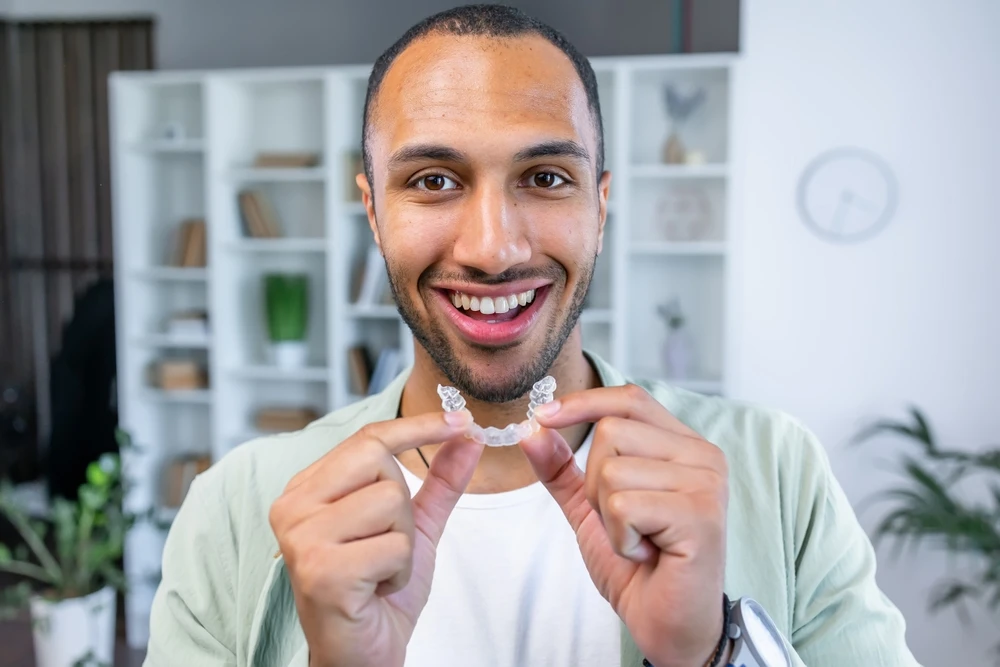
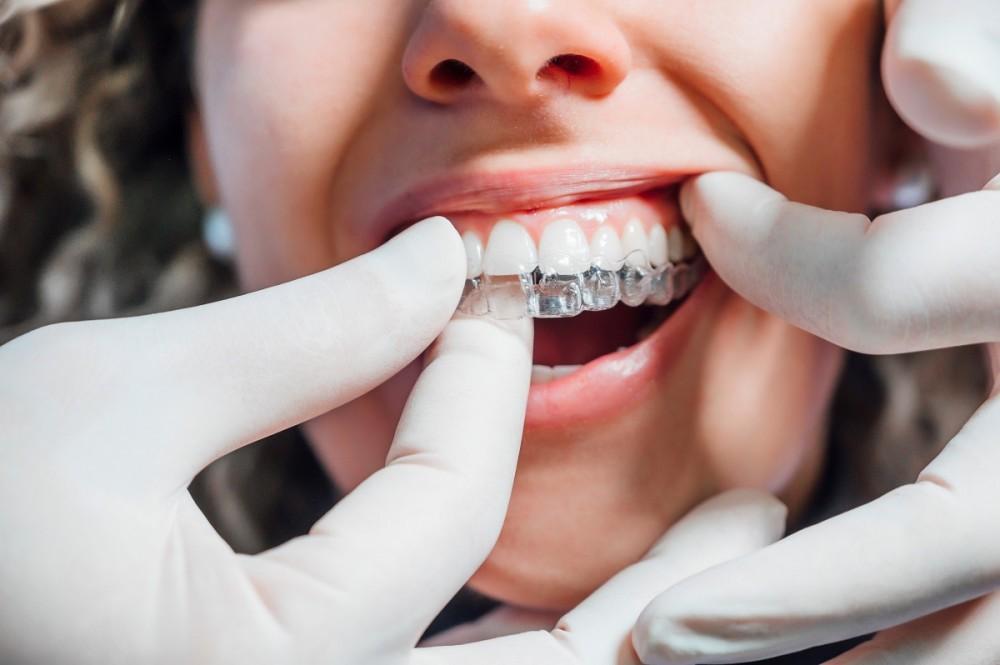
Clear vacuum-formed retainers are the most common recommendation after Invisalign because they look and feel exactly like the aligners you already wore. They are nearly invisible during wear, comfortable, and easy to maintain. Align Technology's Vivera retainer is 30 percent stronger and twice as durable as other leading clear retainer options, according to Align Technology internal data, making it a particularly good choice for long-term use.
Clear retainers typically need replacing every 1 to 3 years, depending on how hard you wear them and whether you grind your teeth at night. Patients who grind tend to wear through plastic retainers faster. The cost of replacement is a factor to plan for. Keeping your retainer case clean, avoiding heat exposure (which warps the plastic), and not wrapping the retainer in napkins at meals all extend its lifespan significantly.
Hawley Retainers
A Hawley retainer uses a metal wire that spans the front teeth and an acrylic base that sits against the palate or the tongue side of the lower arch. They are more durable than clear plastic retainers and can last up to 20 years with proper care. Some providers prefer them because the wire can be adjusted slightly to correct minor tooth movement before it becomes a larger problem. The trade-off is visibility; the wire is noticeable when smiling, which makes many adults prefer clear alternatives.
Fixed or Bonded Lingual Retainers
A fixed retainer is a thin metal wire bonded directly to the back surfaces of the front teeth, making it invisible to anyone looking at your smile. Because it is always in place, it requires no patient compliance and provides continuous retention. A review published in Seminars in Orthodontics found that fixed retainers show better long-term alignment stability than removable retainers in the lower arch, where age-related crowding is most common. The lower front teeth are particularly prone to late crowding in virtually all adults, with or without prior orthodontic treatment.
The main considerations with fixed retainers are cleaning and monitoring. Patients need to use floss threaders or interdental brushes to clean between the bonded teeth, and the wire must be checked regularly for any signs of bond failure. If the wire partially detaches and goes unnoticed, that section of teeth can drift before the problem is caught. Regular dental exams are important for this reason; your provider can check the wire during your routine visit.
Retainer Types: A Side-by-Side Comparison
Retainer TypeVisibilityLifespanPatient Compliance RequiredBest ForClear Removable (Essix / Vivera)Nearly invisible1 to 3 yearsHigh (must be worn nightly)Most Invisalign patients; comfortable ongoing wearHawley (Wire + Acrylic)Wire visible5 to 20 yearsHigh (must be worn nightly)Durability; adjustable for minor correctionsFixed / Bonded Lingual WireInvisible (behind teeth)Indefinite (needs monitoring)None (permanently bonded)Lower front teeth; patients prone to relapse; lifelong stabilityCombination (Fixed + Removable)Depends on removable typeVaries by componentModerate (removable worn over fixed)High-relapse-risk patients; complex bite corrections
Sources: Invisalign.com (Vivera retainer data); Seminars in Orthodontics (retention review, 2025); PubMed (retention and relapse study); American Association of Orthodontists
At What Age Does Invisalign Stop Working?
Invisalign never stops working based on age alone. There is no upper age limit for Invisalign treatment. The process of orthodontic tooth movement relies on the periodontal ligament and bone responding to gentle, consistent pressure, and that biological process continues throughout your entire lifetime. According to the official Invisalign website, teeth-straightening options exist for adults age 50 and over, and the AAO confirms that healthy teeth can be moved at any age.
What changes with age is not whether Invisalign works, but the pace and some of the clinical considerations. Adult bone is denser than teenage bone, which means tooth movement can be slightly slower. A study referenced in Healthline found that the rate of tooth movement can actually increase slightly between ages 35 and 50, meaning Invisalign can be especially effective during those years. Treatment may take a few extra months for some older adults, but the end results are comparable to those achieved in younger patients.
According to the AAO's 2025 patient census, 1.91 million adults were in active orthodontic treatment in the United States, with the adult share of orthodontic patients now at approximately 1 in 3. The number of adults in treatment is at an all-time high and continues to grow year over year.
Is Invisalign Worth It at 55?
Yes, Invisalign is worth it at 55 for patients with healthy teeth and gums. Many adults in their 50s and beyond complete treatment and achieve excellent results. In fact, older adults often make the most compliant Invisalign patients because they are highly motivated, disciplined about wearing their aligners consistently, and serious about following post-treatment instructions. A PMC study published in Motivation, Perception, and Behavior of the Adult Orthodontic Patient found that adult patients are generally more attentive to provider recommendations than younger patients, which directly improves outcomes.
The health reasons for straightening teeth at 55 are just as compelling as the cosmetic ones. Straight teeth are significantly easier to clean. They reduce food trapping that contributes to gum disease, tooth decay, and bone loss. They distribute bite forces evenly, reducing wear and the risk of fractures. For patients who plan to keep their natural teeth for decades longer, alignment correction in middle age is an investment in long-term oral health, not just a cosmetic upgrade.
The most important evaluation at any age is gum and bone health. Your provider will assess these at your consultation for clear aligners. If your gums and bone are healthy, age is not a barrier.
What Disqualifies You from Invisalign?
Several conditions disqualify you from Invisalign, though most of them are temporary barriers rather than permanent ones. The most common reasons a patient may not be ready for Invisalign are active gum disease, untreated cavities, and significant bone loss. None of these means you can never get Invisalign; they mean you need to address those conditions first.
Active Gum Disease
Active gum disease (periodontal disease) is the most common disqualifying condition. When gums are infected or inflamed, the bone and connective tissue supporting the teeth are already compromised. Applying orthodontic force to teeth with an unstable foundation can worsen bone loss and loosen teeth further. According to the CDC, nearly half of adults aged 30 and older in the United States show some sign of periodontal disease. A significant portion of those adults have gingivitis (early-stage, reversible gum inflammation) rather than periodontitis, and gingivitis can typically be resolved with professional cleaning and improved home care before treatment begins. Once gum health is stable, Invisalign treatment can proceed safely.
Untreated Cavities and Decay
Untreated cavities must be resolved before starting Invisalign. Placing clear aligners over teeth with active decay traps bacteria directly against weakened enamel for 20 to 22 hours a day, accelerating the damage. Any cavities present at the time of your consultation will need to be filled before your first aligner set is ordered. Tooth-colored fillings restore the tooth and allow treatment to proceed without further risk to enamel integrity.
Severe Bite Problems and Complex Cases
Invisalign is highly effective for mild to moderate crowding, spacing, overbites, underbites, and crossbites. Severe skeletal discrepancies, large rotations, and cases requiring significant vertical tooth movement may be better handled with traditional braces, which allow more mechanical precision for certain complex movements. Your provider will evaluate your specific case during a consultation for invisible aligners and confirm whether clear aligner treatment can achieve your goals or whether a different approach is more appropriate.
Significant Bone Loss
Bone loss from advanced periodontitis requires individual assessment before Invisalign begins. Teeth with severely reduced bone support may be at risk of becoming looser under orthodontic forces. In some cases, patients with moderate bone loss can still safely proceed with Invisalign once gum disease is under control, with gentler movement forces and more frequent monitoring. In cases of severe bone loss, Invisalign may not be appropriate until the bone levels are stabilized or augmented.
Lack of Commitment to Wear Time
Invisalign simply does not work if the trays are not worn for 20 to 22 hours per day. This is not a minor detail; a 2025 systematic review published in the orthodontic literature identified patient compliance as the single most influential variable in Invisalign treatment success. If a patient has a lifestyle or behavioral pattern that makes consistent aligner wear difficult to maintain, that needs to be discussed openly with the provider before treatment begins.
Why Don't Dentists Recommend Invisalign in Some Cases?
Dentists do not recommend Invisalign in some cases because the treatment is not ideal for every orthodontic problem, and recommending an inappropriate approach leads to poor results. A dentist who steers a patient toward traditional braces for a complex bite issue is making the right call, not an anti-Invisalign one. The same logic applies to the retainer conversation: a dentist who insists on long-term retainer use is protecting your investment and your smile, not being overcautious.
The broader clinical reality is that Invisalign has an 88 percent effectiveness rate for the cases it is designed to treat, and its effectiveness for mild to moderate cases is comparable to braces, according to comparative studies cited by the AAO. For those cases, Invisalign is an excellent choice, and about 80 percent of adult orthodontic patients choose clear aligners over traditional braces when both are an option. For a deeper look at how the two approaches stack up, our post on braces vs clear aligners covers the key differences in detail.
Regular preventive care before, during, and after Invisalign treatment is one of the most important things you can do to protect your results. Good gum and bone health is the foundation that makes orthodontic treatment last.
Why Do People Quit Invisalign?
People quit Invisalign most often because of the discipline required to wear trays consistently for 20 to 22 hours per day, the inconvenience of the post-meal cleaning routine, and frustration when treatment takes longer than expected due to refinements. Some patients quit because they underestimated these demands before starting. Others experience discomfort during tray transitions and disengage before finding their stride.
The best defense against quitting is realistic expectations from the beginning. Most Invisalign patients rate their overall satisfaction at 8.7 out of 10 according to patient experience data. The patients who struggle most are those who were not given a clear picture of what consistent wear time, the cleaning routine, and the retention phase actually require. Well-informed patients complete treatment at much higher rates and are more committed to the retainer phase that protects their results long term. Our post on how long Invisalign takes to straighten teeth is a helpful reference for setting realistic timeline expectations before you begin.
Is 35 Too Old for Invisalign?
No, 35 is not too old for Invisalign. Adults in their 30s are actually among the most successful Invisalign patients. Research referenced in Healthline found that the rate of tooth movement increases slightly between ages 35 and 50, suggesting that biology may actually work in your favor during these years. Adults at 35 typically have stable jaw growth, healthy teeth, and the discipline to follow a treatment plan consistently. According to the AAO, adult orthodontic patients grew by more than 27 percent between 2012 and 2018 alone, and the average age of patients seeking clear aligner treatment continues to rise.
The only factors that determine whether 35 is the right time for Invisalign are the health of your gums and bone, the complexity of your case, and your commitment to wearing the aligners as directed. Age itself is never the limiting factor. We work with adult orthodontic patients across a full range of ages, and the results speak for themselves.
How Many Hours a Day Do Most People Wear Invisalign?
Most people are instructed to wear Invisalign for 20 to 22 hours per day during active treatment, leaving 2 to 4 hours for eating, drinking anything other than water, and oral hygiene. This is the clinical standard set by Align Technology and reinforced by virtually every orthodontic provider. Falling below 20 hours consistently is one of the most common reasons treatment stalls or requires additional refinement trays.
During the post-treatment retention phase, wear time drops significantly. The first 3 to 6 months usually require the same 20 to 22 hours, just like active treatment. After that, most patients move to 8 to 10 hours per night. Long term, some reduce further to a few nights per week if their provider confirms that their teeth remain stable. Tracking wear time is easier than ever with apps designed specifically for clear aligner patients, which can also send reminders to reinsert trays after meals.
Frequently Asked Questions
Do You Wear a Retainer Forever After Invisalign?
Yes, you wear a retainer for life after Invisalign, but the routine becomes much easier over time. Full-time wear of 20 to 22 hours per day is required for the first 3 to 6 months. After that, nightly wear while you sleep is the standard long-term recommendation. Some patients reduce to a few nights per week after the first year or two under provider guidance, but nightly wear indefinitely provides the most reliable protection against gradual tooth movement.
At What Age Does Invisalign Stop Working?
Invisalign never stops working based on age. There is no upper age limit for clear aligner treatment. As long as teeth and gums are healthy, Invisalign can move teeth effectively at any age. Adults in their 60s, 70s, and older have completed treatment successfully. The biological mechanism of orthodontic tooth movement continues throughout your lifetime, which is exactly why retainers are also needed for life.
Is 27 Trays a Lot for Invisalign?
Twenty-seven trays is a moderate number for Invisalign and typically corresponds to a treatment lasting 6 to 13 months, depending on whether trays are changed weekly or every two weeks. Simple cases may use 10 to 20 trays; more complex cases can require 40 or more. The number of trays does not determine how well Invisalign works; it reflects the amount of tooth movement planned. After completing all trays, the retention phase and consistent retainer use matter more than how many trays were in the series.
Is $2,500 for Invisalign Good?
As a general note, Invisalign costs vary depending on case complexity, location, and provider. We do not quote specific prices in this article because treatment fees vary for each patient and change over time. The best way to know what treatment will cost for your specific situation is to schedule a consultation, where your provider can assess your needs and give you an accurate estimate. Many offices also offer flexible financing options that make treatment more accessible.
What Disqualifies You from Invisalign?
You may be temporarily disqualified from Invisalign if you have active gum disease, untreated cavities, significant bone loss from periodontitis, or an inability to commit to 20 to 22 hours of daily wear. Most of these conditions are treatable, so a temporary "not yet" often becomes a "yes" once those issues are resolved. Severe skeletal discrepancies or complex bite problems may require traditional braces instead of clear aligners for the most precise results.
Is Invisalign Worth It at 55?
Invisalign is absolutely worth it at 55 for patients with healthy teeth and gums. There is no age limit for treatment, and adults in their 50s often make excellent candidates because of their high compliance and motivation. The health benefits of properly aligned teeth, including easier cleaning, reduced gum disease risk, and better bite mechanics, are just as relevant in middle age as they are in youth. A thorough evaluation with your provider will confirm whether clear aligner treatment is the right fit for your specific oral health situation.
Why Do People Quit Invisalign?
People quit Invisalign most often because they find the daily wear-time discipline and post-meal hygiene routine harder to maintain than expected, or because refinements extend the treatment timeline beyond what they anticipated. Discomfort during tray transitions also leads some patients to disengage. Setting realistic expectations before treatment begins, choosing a provider who communicates clearly, and understanding that the retention phase is a permanent commitment are the three most effective ways to stay on track through the full process.
Wrapping It Up
Long-term retainer use after Invisalign is the final step in a treatment that protects everything you invested in your smile. The science is clear: teeth move throughout your life in response to everyday forces, and the only reliable tool for managing that movement is wearing a retainer on a consistent schedule, starting immediately after treatment and continuing indefinitely. Whether you choose a clear removable retainer, a Hawley retainer, a fixed lingual wire, or a combination of these, the key is consistency. Every night you skip is a small opportunity for drift that compounds over months and years.
If you are thinking about starting Invisalign, correcting teeth that shifted after past orthodontic work, or simply want guidance on the best retainer option for your situation, we are here to help. Reach out to Castellanos Dental and take the first step toward a smile that stays straight for life.
.png)
.png)

.png)


.png)
.png)
.png)
.png)

.png)
.png)
.svg)


