.png)
.svg)
.png)

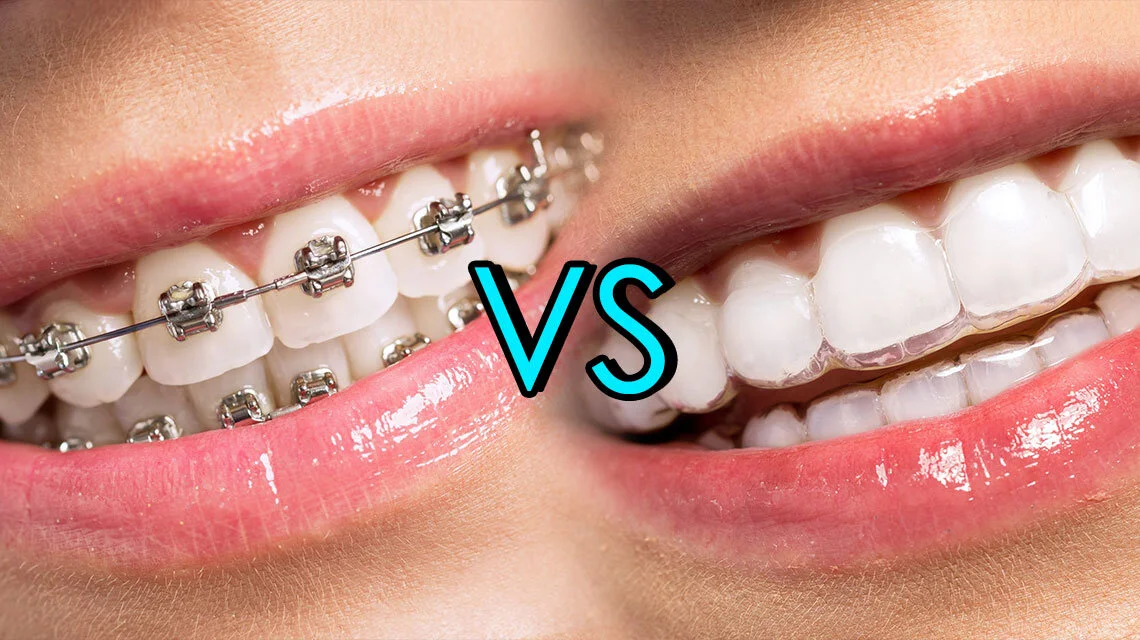
Invisalign vs Braces: Which Is Better
.png)
.png)
Neither Invisalign nor braces is universally better. Invisalign is the better choice for mild to moderate crowding, gaps, and minor bite issues because it is nearly invisible, removable, and more comfortable. Braces are the better choice for severe misalignment, large tooth rotations, and complex bite corrections because they give the dentist more direct control over tooth movement. A study published in PMC found that both methods achieve 88 to 90% success rates in correcting malocclusion, so the real question is which one fits your specific case and lifestyle.
In this article, we compare Invisalign and braces side by side on everything that matters: effectiveness, comfort, treatment time, oral hygiene, appearance, and what types of problems each one handles best. We also answer the most common questions patients ask when deciding between the two.
Are Braces More Effective Than Invisalign?
Braces are more effective than Invisalign for complex orthodontic cases, but for mild to moderate cases, both are equally effective. A retrospective study published in PMC compared long-term outcomes of Invisalign and conventional braces and found that braces achieved a 90% success rate while Invisalign achieved 88%. The two-percentage-point difference was not statistically significant. Both treatments corrected malocclusion successfully in the vast majority of patients.
Where braces pull ahead is in difficult movements. A systematic review published in PMC found that clear aligners are not as effective as braces at producing adequate occlusal contacts, controlling tooth torque, and increasing transverse width. Rotating cylindrical teeth like canines and premolars is one of the hardest movements for aligners. Braces handle these movements with precision because the brackets and wires apply continuous, three-dimensional force directly to each tooth.
For straightforward crowding, gaps, and minor bite problems, clear aligners are just as effective as braces and offer a much more comfortable experience. The key is proper case selection. An experienced dentist evaluates your teeth and recommends the method that will produce the best result for your specific situation.
Invisalign vs Braces: How They Work
How Does Invisalign Straighten Teeth?
Invisalign straightens teeth using a series of custom-made, clear plastic trays called aligners. Each tray is designed to move your teeth a tiny amount, and you switch to a new tray every one to two weeks. The aligners fit snugly over your teeth and apply gentle, constant pressure that gradually shifts them into the correct position. You wear them for 20 to 22 hours a day and remove them only for eating, drinking anything other than water, and brushing.
The entire treatment plan is mapped out digitally before you start. Your dentist takes 3D scans of your mouth and uses software to plan every stage of tooth movement from start to finish. According to Align Technology, the maker of Invisalign, over 22 million patients worldwide have been treated with the system as of 2025, and the company works with more than 280,000 trained providers.
How Do Traditional Braces Straighten Teeth?
Traditional braces straighten teeth using metal or ceramic brackets bonded directly to each tooth, connected by an archwire. The wire applies steady pressure, and your dentist adjusts it at regular appointments (usually every four to six weeks) to keep the teeth moving in the right direction. Some patients also wear rubber bands to help correct bite alignment.
Because braces are fixed to the teeth, they work 24 hours a day without any effort from the patient. There is no risk of forgetting to wear them or taking them out too much. This makes braces the preferred option for patients who may have trouble with compliance, including younger teens. Braces have been used successfully for decades and remain the gold standard for complex orthodontic corrections.
What Are the Negatives of Invisalign?
The negatives of Invisalign are that it requires strict patient compliance, it is less effective for complex cases, and it can be slightly more expensive than braces. You must wear the aligners for 20 to 22 hours a day. Every time you eat or drink, you need to remove them, brush your teeth, and put them back in. Some patients find this routine difficult to maintain, especially during busy days or social events.
A 2023 study published in the American Journal of Orthodontics and Dentofacial Orthopedics found that 17.2% of Invisalign patients, roughly 1 in 6, had to switch to traditional braces to finish their treatment. This usually happened because the case was more complex than initially planned, or the aligners could not produce the precise tooth movements needed. The same study found that the average Invisalign case requires about 2.5 refinement scans, and only 6% of patients complete treatment without a single refinement.
Invisalign is also limited in its ability to rotate teeth, extrude teeth, or make large vertical movements. Research published in PMC confirms that aligners struggle with these specific movements compared to braces. For patients with mild to moderate issues, these limitations rarely come into play. But for complex cases, they can be deal-breakers. A thorough dental exam before starting treatment helps determine whether Invisalign can handle your specific needs.
What Problems Can Invisalign Fix?
Invisalign can fix mild to moderate crowding, gaps between teeth, overbite, underbite, crossbite, and open bite when the issues are not severe. It is also effective for general alignment improvements and minor tooth rotations. According to clinical data, Invisalign achieves an 80 to 90% success rate for these types of cases.
Specific issues Invisalign handles well include teeth that are slightly overlapping, small to medium gaps between teeth, a bite that is slightly off, and teeth that need minor straightening for cosmetic reasons. Many patients in Hialeah, Florida and surrounding areas choose Invisalign because it gives them a straighter smile without the visible metal of braces.
Invisalign is not the best option for severe crowding, large tooth rotations, significant vertical movements, or major jaw alignment issues. These cases require the continuous, multi-directional force that braces provide. If you are unsure which category your case falls into, a consultation will give you a clear answer.
What Age Is Best for Invisalign?
The best age for Invisalign is typically 12 years and older, once most or all permanent teeth have come in. Invisalign offers a product called Invisalign First for younger children (ages 6 to 10) who still have baby teeth, but the standard Invisalign system works best for teens and adults with a full set of permanent teeth.
Adults make up the largest segment of Invisalign users. According to market data, adults account for more than 64% of all clear aligner patients. This makes sense because adults are often more motivated by appearance and more capable of following the strict wear schedule. According to Align Technology, 84% of prospective teen patients prefer Invisalign over traditional braces, but teens need to be mature enough to wear aligners consistently.
Adult orthodontics has grown significantly in recent years, with more patients than ever choosing to straighten their teeth later in life. Age alone does not disqualify anyone from Invisalign. What matters is the health of your teeth and gums, and the complexity of your case.
Can a Person Be Too Old for Invisalign?
No, a person cannot be too old for Invisalign. There is no upper age limit for clear aligner treatment. As long as your teeth and gums are healthy, Invisalign can work at any age. We see patients in their 40s, 50s, 60s, and beyond who achieve excellent results.
Older adults may have additional considerations like gum disease, bone loss, or dental restorations (crowns, bridges, implants) that need to be accounted for in the treatment plan. But these are not automatic disqualifiers. A comprehensive evaluation determines whether Invisalign is a good fit. In many cases, addressing gum health first and then starting aligner treatment produces great outcomes.
What Disqualifies You for Invisalign?
The things that disqualify you for Invisalign include severe malocclusion requiring jaw surgery, significant bone loss from advanced gum disease, too many missing teeth to anchor the aligners properly, and complex tooth movements that aligners cannot achieve (large rotations, significant vertical shifts, or major bite corrections).
Active gum disease must be treated before any orthodontic treatment begins, whether Invisalign or braces. Teeth need a healthy foundation to move safely. Strong preventive care habits, including regular checkups and cleanings, set you up for the best possible outcome with either treatment.
The list of disqualifiers has gotten shorter over the years as aligner technology has improved. Cases that were once considered too complex for Invisalign are now treatable thanks to SmartForce attachments and improved digital planning tools. Patients with multiple dental crowns or bridges may still face limitations because attachments do not always bond well to those surfaces. But for truly severe cases, your dentist will be straightforward about whether Invisalign can handle your situation.
Invisalign vs Braces: A Side-by-Side Comparison
FactorInvisalignTraditional BracesSuccess Rate88% for mild to moderate cases90% for all levels of difficultyAverage Treatment Time12 to 18 months18 to 24 monthsAppearanceNearly invisible clear plasticVisible metal or ceramic bracketsComfortSmooth plastic, no sharp edgesBrackets and wires can irritate cheeks and gumsRemovabilityRemovable for eating, drinking, brushingFixed; cannot be removed until treatment endsOral HygieneEasier; brush and floss normallyHarder; requires special brushing techniquesCompliance NeededMust wear 20-22 hours dailyNo compliance needed; always workingComplex CasesLimited for severe rotations and vertical movementsEffective for all levels of complexityWhite Spot Lesion Risk1.2% of patients (Buschang et al.)26% of patients (Buschang et al.)Relapse Rate12%10%
Sources: PMC Comparative Analysis (2024), American Journal of Orthodontics (2023), Align Technology (2025), Buschang et al. white spot lesion study, PMC systematic reviews.
How Does Oral Hygiene Compare Between Invisalign and Braces?
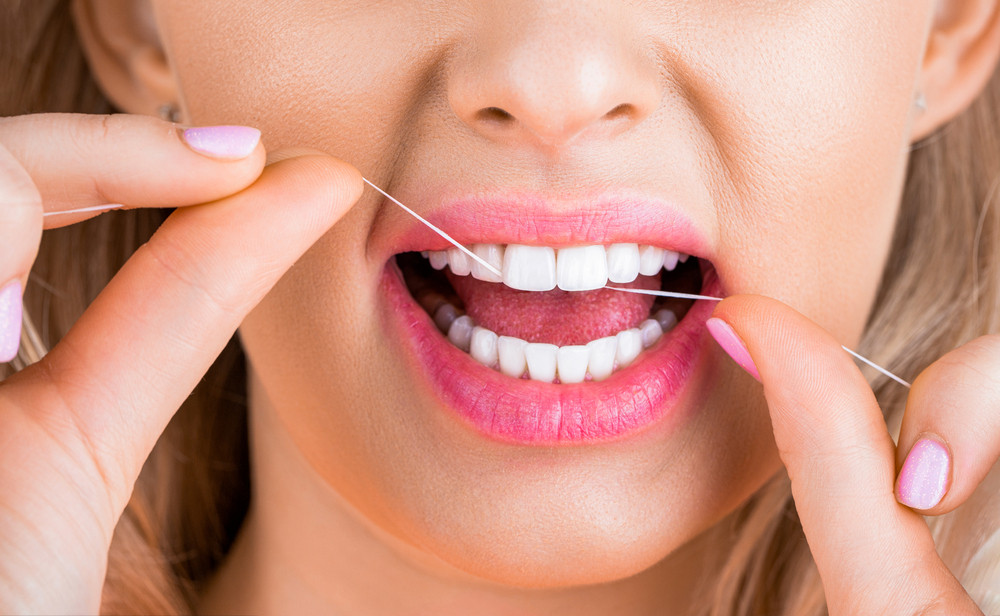
Oral hygiene is significantly easier with Invisalign than with braces. Because aligners are removable, you can brush and floss your teeth normally. With braces, brackets and wires create hard-to-reach spots where plaque builds up, making thorough cleaning much more difficult.
A study published in PMC found that patients with clear aligners had a gingival index score of 0.72, while patients with fixed braces had a score of 1.39, meaning significantly less gum inflammation in the aligner group. Another study by Buschang et al. found that white spot lesions, the chalky white marks caused by enamel damage from plaque, developed in only 1.2% of aligner patients compared to 26% of patients with traditional braces.
A systematic review published in MDPI confirmed that clear aligners are associated with less plaque accumulation, less gingival inflammation, and fewer detrimental changes to the oral microbiome compared to fixed appliances. The removability of aligners gives patients a major advantage in keeping their mouth clean during treatment. Staying on top of regular teeth cleanings during orthodontic treatment is important regardless of which method you choose.
Why Don't Some Dentists Recommend Invisalign?
Some dentists do not recommend Invisalign because their specific patient needs braces, not because Invisalign is a bad product. If a patient has severe crowding, major bite problems, or teeth that need large rotations, braces are simply the more reliable tool for the job. A good dentist recommends the treatment that will give the best result, not the one that is most popular.
Some dentists also have less training or experience with Invisalign compared to braces. According to Align Technology, there are over 280,000 Invisalign-trained providers worldwide, but the level of experience varies widely. A dentist who has treated hundreds of Invisalign cases will feel confident recommending it for a broader range of situations than one who has treated only a handful.
The bottom line is that both treatments are excellent tools, and a dentist who recommends one over the other is making a clinical judgment based on your case. If you want to explore your orthodontic options, start with a consultation so your dentist can evaluate your teeth and give you an honest recommendation.
Will My Teeth Move 20 Years After Braces?
Yes, your teeth can move 20 years after braces if you do not wear a retainer. Teeth have a natural tendency to shift throughout your entire life due to changes in the jawbone, gum tissue, and the pressure of everyday activities like chewing and speaking. The American Association of Orthodontists recommends wearing a retainer indefinitely after orthodontic treatment to maintain your results.
A study published in the Cochrane Database of Systematic Reviews found that orthodontic relapse is common without retention, and the evidence supports long-term retainer use. The bone and ligaments around your teeth need time to stabilize after treatment, and even after they do, natural age-related changes can cause shifting. Many patients who had braces as teenagers notice their teeth moving in their 30s, 40s, or beyond because they stopped wearing their retainer.
Whether you choose Invisalign or braces, the retention phase is just as important as the treatment itself. Wearing a retainer as directed protects the investment you made in your smile. Patients in West Hialeah who have already experienced shifting after previous orthodontic treatment can often fix it with a new round of aligner therapy.
If your teeth have shifted and you want to explore your options, clear aligners can often straighten them again without going back to braces.
How Often Are Invisalign Checkups?
Invisalign checkups are typically scheduled every 6 to 8 weeks, though some dentists use remote monitoring technology that allows for longer intervals between in-office visits. At each appointment, your dentist checks that your teeth are tracking properly with the current set of trays and gives you the next several sets of aligners to use at home.
Braces usually require appointments every 4 to 6 weeks for wire adjustments. Invisalign tends to require fewer total office visits over the course of treatment because the aligners are pre-made for each stage. This is a practical advantage for patients with busy schedules.
Regular checkups are essential for both treatments. They allow your dentist to catch any problems early, adjust the plan if needed, and make sure everything is moving on schedule. Skipping checkups can lead to longer treatment times, unexpected setbacks, and results that fall short of the plan. Routine dental exams during treatment also help catch cavities, gum issues, or other problems before they become serious.
Is 21 Too Late for Invisalign?
No, 21 is not too late for Invisalign. In fact, 21 is an ideal age for many patients. By 21, all permanent teeth (including wisdom teeth in most cases) have erupted, and the jaw has finished most of its growth. Adults account for more than 64% of all clear aligner patients, according to market data, and many of them are in their 20s and 30s.
There is no age that is "too late" to straighten your teeth. The only requirements are healthy teeth and gums and a case that falls within Invisalign's capabilities. Many of our patients start clear aligner treatment in their 20s, 30s, 40s, and beyond with excellent results. We also see patients who had braces as teenagers and need minor corrections later in life.
What Is the 30 Minute Rule for Invisalign?
The 30 minute rule for Invisalign means you should keep each meal or snack to about 30 minutes so your aligners are out of your mouth for as little time as possible. Invisalign requires 20 to 22 hours of daily wear, which leaves only two to four hours total for eating, drinking, and brushing. If meals stretch too long, you eat into your wear time and risk slowing down your treatment.
This rule is not about rushing your food. It is about being mindful of how much time your aligners spend outside your mouth during the day. Planning your meals at set times and brushing right after eating helps you stay within the recommended wear window. Patients who consistently hit 22 hours of daily wear tend to have the smoothest, fastest treatment.
How to Decide Between Invisalign and Braces
The decision between Invisalign and braces comes down to three things: the complexity of your case, your lifestyle, and your ability to follow the treatment requirements.
Choose Invisalign if your case is mild to moderate, you want a discreet appearance, you can commit to wearing aligners 20 to 22 hours a day, and you value the ability to eat without restrictions and brush your teeth normally. Invisalign is also a strong choice if you are an adult in a professional setting where visible braces would feel uncomfortable.
Choose braces if your case is complex, you have severe crowding or a significant bite problem, you prefer a treatment that works on its own without daily compliance decisions, or you are a younger teen who might not consistently wear removable trays. Braces are the more predictable option for difficult cases and do not depend on patient behavior to be effective. A deeper look at the pros and cons of each can help you weigh the tradeoffs.
Both treatments deliver excellent results when matched to the right case. Your dentist can look at your teeth, take scans, and tell you which one is the better fit. We help patients weigh these factors every day at our practice and always recommend the option that gives the best outcome for their specific situation. Patients considering a full smile upgrade sometimes combine orthodontic work with cosmetic dentistry treatments for even more dramatic results.
Frequently Asked Questions
What Is the Biggest Complaint About Invisalign?
The biggest complaint about Invisalign is discomfort while chewing, especially during the first few days of a new tray. A study published in PubMed found that 44% of patients reported chewing difficulty as their main concern. The strict wear schedule of 20 to 22 hours per day is also a common complaint, as it requires discipline around meals and snacking.
How Many Trays Is 2 Years of Invisalign?
2 years of Invisalign is roughly 52 to 104 trays, depending on whether you switch trays every one or two weeks. Weekly changes result in about 104 trays, while two-week changes result in about 52. The exact number depends on your treatment plan and the complexity of your case.
Why Do People Quit Invisalign?
People quit Invisalign most often because of the strict daily wear commitment, not because of pain. Wearing aligners for 22 hours a day takes discipline, especially when eating out, traveling, or managing a busy schedule. A 2023 study found that 17.2% of patients switched to braces to complete treatment, usually because the case required movements that aligners could not achieve.
Is Invisalign Faster Than Braces?
Invisalign is often faster than braces for mild to moderate cases. A study published in PMC found that the average Invisalign treatment lasted 18 months compared to 24 months for braces. However, this partly reflects the fact that Invisalign is used more often for simpler cases. For similar complexity, the time difference narrows.
Can You Eat Normally With Invisalign?
Yes, you can eat normally with Invisalign because the aligners are removed before every meal. There are no food restrictions. You can eat hard, crunchy, sticky, and chewy foods freely. With braces, you must avoid these foods to prevent damaging the brackets and wires.
Do Braces or Invisalign Hurt More?
Braces generally hurt more than Invisalign. A randomized trial published in the Angle Orthodontist found that patients with traditional braces reported significantly greater discomfort during the first week of treatment and took more pain medication. Invisalign pain is mostly a dull pressure, while braces can cause sharper irritation from brackets and wires rubbing against the cheeks.
Putting It All Together
Invisalign and braces are both proven, effective ways to straighten teeth. Invisalign is the better option for mild to moderate cases where appearance, comfort, and convenience are top priorities. Braces are the better option for complex cases that need the precision and continuous force of brackets and wires. Clinical research shows success rates of 88% for Invisalign and 90% for braces, with the difference being too small to be statistically significant for most cases.
The best way to decide is to get a professional evaluation of your teeth. Your dentist will look at the specific movements your teeth need, your oral health, your lifestyle, and your goals, and recommend the option that gives you the best result. We help patients make this decision every day at Castellanos Dental.
Call us at 305-820-4080 to schedule your consultation and find out which treatment is right for your smile.
.png)
.png)

.png)


.png)

.png)
.png)
.png)

.png)
.png)
.svg)


