.png)
.svg)
.png)

How Dental Exams Catch Problems Early?
.png)
.png)
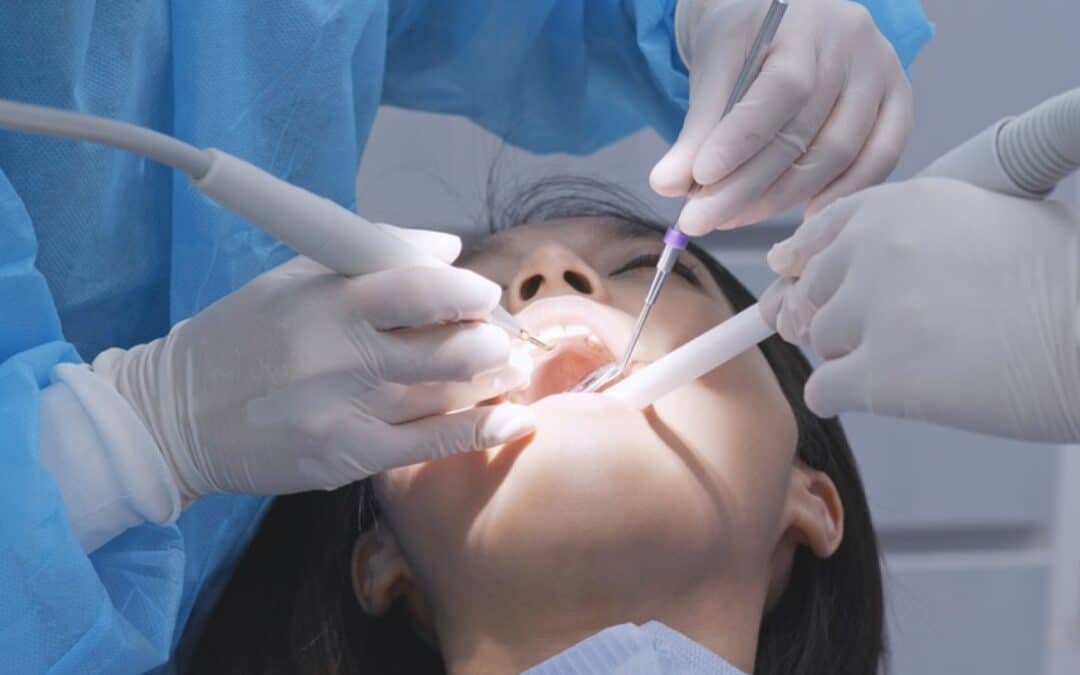
Dental exams catch problems early by giving your dentist the chance to spot cavities, gum disease, oral cancer, and other issues before they cause pain or get worse. A routine dental exam takes about 30 minutes and uses tools like X-rays, mirrors, and screenings to find things you cannot see or feel on your own. This article covers what happens during a dental exam, what problems dentists look for, why early detection saves time and money, and how families in Hialeah, Florida can stay ahead of common oral health issues.
What Does a Dental Exam Check For?
A dental exam checks for cavities, gum disease, oral cancer, bite problems, signs of teeth grinding, and the condition of any past dental work like fillings or crowns. Your dentist also looks at the soft tissues of your mouth, including your tongue, cheeks, and the roof of your mouth, for anything unusual.
According to the CDC, about 90% of adults in the United States have had at least one cavity in their lifetime. Many of these cavities started small and could have been caught sooner with a regular exam. During your visit, X-rays reveal decay hiding between teeth or below the gum line, areas that are impossible to see with the naked eye.
Families across Hialeah often wait until pain shows up before visiting a dentist. But pain is usually one of the last signs that something is wrong. A dental exam in West Hialeah gives your dentist a clear picture of your oral health before small issues become big, expensive problems.
How Often Should You Get a Dental Exam?
You should get a dental exam every six months for most people. Some patients, like those with a history of gum disease, diabetes, or a weakened immune system, may need to visit more often. The American Dental Association recommends having exams at regular intervals based on your individual risk factors.
Data from the National Health Interview Survey shows that only about 64% of adults aged 18 to 64 had a dental visit within the past year. That means more than one out of three adults are skipping their regular checkups. The CDC reports that nearly 46% of all adults aged 30 and older already have some form of gum disease, making regular exams even more important.
Children should start seeing a dentist by their first birthday or when their first tooth appears. According to research cited by the American Academy of Pediatric Dentistry, a child's first dental visit at age 4 or younger can save parents an average of $360 over eight years. Starting early builds good habits and gives the dentist a chance to catch issues during development.
Can a Dental Exam Detect Gum Disease Early?
Yes, a dental exam can detect gum disease early, often before you notice any symptoms. Dentists measure the pocket depth around each tooth using a small tool called a probe. Deeper pockets signal infection or the early stages of periodontal disease.
According to the National Institute of Dental and Craniofacial Research (NIDCR), 42.2% of adults aged 30 and older in the United States have periodontitis. Of those, 7.8% have the severe form of the disease. The NIH MedlinePlus Magazine reports that nearly 60% of adults aged 65 and older have some form of gum disease. These numbers show just how common this condition is, and how easily it can go unnoticed without a proper exam.
Gum disease starts quietly. The first stage, gingivitis, causes red, swollen gums that may bleed when you brush. If left alone, it moves into periodontitis, where the gums pull away from the teeth and the bone underneath starts to break down. Residents of Hialeah who keep up with their preventive dentistry visits are far less likely to reach this advanced stage.
Published research in the International Journal of Health Sciences confirms that periodontal disease can raise the risk of cardiovascular disease by up to 19%, and that risk climbs even higher in adults over 65. Catching gum disease early is not just about saving teeth. It is about protecting your overall health.
What Problems Can a Dentist Find That You Cannot See?
A dentist can find problems that you cannot see, including hidden cavities between teeth, bone loss beneath the gums, infections at the root of a tooth, cysts, tumors, and early signs of oral cancer. Digital X-rays and intraoral cameras give your dentist a detailed view of what is happening below the surface.
The CDC's 2024 Oral Health Surveillance Report found that about 26% of U.S. adults aged 20 to 64 currently have untreated cavities. Many of these cavities sit between teeth or underneath old fillings, where you would never spot them in a mirror. Without X-rays taken during a dental exam, these areas of decay can grow silently for months or even years.
Bone loss is another hidden problem. When gum disease goes untreated, it slowly eats away at the bone that holds your teeth in place. This bone loss is completely invisible to the eye but shows up clearly on dental X-rays. Catching it early means your dentist can step in with professional teeth cleaning or deeper treatments to stop the damage before teeth become loose.
Do Dental Exams Include Oral Cancer Screenings?
Yes, dental exams include oral cancer screenings. During the exam, your dentist checks the inside of your cheeks, your tongue, the floor and roof of your mouth, your lips, and your throat for any unusual patches, sores, or lumps. This painless screening takes only a minute or two.
The American Cancer Society estimates that about 60,480 new cases of oral cavity or oropharyngeal cancer will be diagnosed in the United States in 2026, with roughly 13,150 deaths. The five-year survival rate for localized oral cancers, those caught before they spread, is around 85%, according to the SEER database maintained by the National Cancer Institute. But when the cancer has already spread to other parts of the body, that rate drops to about 40%.
The Oral Cancer Foundation notes that about 60% of oral cancer cases are still discovered at a late stage. That is because many early oral cancers do not cause pain. They often begin as a small sore, a white or red patch, or a tiny lump that you might ignore. A dentist trained in oral cancer screenings knows exactly what to look for and can flag suspicious areas long before they become dangerous.
For families in the West Hialeah area, making oral cancer screenings part of your regular dental visit is one of the simplest steps you can take to protect your health.
How Do Dental X-Rays Help Catch Problems Early?
Dental X-rays help catch problems early by showing your dentist what is happening inside and between your teeth, under your gums, and in the bone that supports your smile. They reveal hidden cavities, infections, bone loss, impacted teeth, and abnormal growths that a visual exam alone cannot detect.
There are a few common types of X-rays used during dental exams. Bitewing X-rays show the crowns of your upper and lower teeth and help find decay between teeth. Periapical X-rays capture the full length of a tooth, including the root and surrounding bone. Panoramic X-rays provide a wide view of your entire mouth in a single image, which is useful for spotting impacted wisdom teeth, jaw problems, or tumors.
Modern digital X-rays use far less radiation than the film X-rays of the past. They also produce instant, high-resolution images that your dentist can zoom in on and explain to you right there in the chair. This technology is one reason why today's dental exams are more accurate and efficient than ever before.
Can Dental Exams Save You Money in the Long Run?
Yes, dental exams can save you money in the long run. A small cavity found early may only need a simple filling. But if that same cavity is ignored, it can grow into a deep infection that requires a root canal, a crown, or even an extraction and replacement.
The CDC reports that emergency department visits related to dental issues cost more than $1.6 billion each year in the United States. Most of those visits could have been avoided with regular preventive care. According to research published by the CDC, community water fluoridation alone saves the nation about $6.5 billion annually by reducing the need for dental treatments. Regular exams amplify those savings even further.
Untreated oral health problems also take a toll on daily life. The Hawai'i Health Data Warehouse, citing CDC data, reports that about 34 million school hours are lost each year in the United States because of emergency dental care. For adults, untreated dental disease costs the U.S. economy an estimated $45 billion annually in lost productivity.
Hialeah families who stay on top of their general and family dentistry visits avoid these hidden costs and keep their smiles healthy for less money over time.
What Happens During a Dental Exam for Kids?
During a dental exam for kids, the dentist checks for cavities, monitors how the teeth and jaw are developing, looks at the bite, and evaluates the health of the gums. The visit usually includes a gentle cleaning, a fluoride treatment, and sometimes X-rays depending on the child's age and risk level.
According to the CDC, over 50% of children in the United States have had at least one cavity in their baby teeth by age 8. Children from low-income families are twice as likely to have untreated cavities compared to children from higher-income households. Early and regular dental exams are one of the best ways to close this gap and keep kids on track.
The CDC also reports that dental sealants, a thin protective coating placed on the chewing surfaces of back teeth, can prevent 80% of cavities for up to two years and continue to protect against 50% of cavities for up to four years. These dental sealants are often applied during a child's routine exam, making the visit even more valuable.
In Hialeah, many parents bring their children in for their first visit around age one. Starting this early helps kids get comfortable with the dentist and gives the care team a head start on preventing problems.
Is There a Link Between Dental Health and Overall Health?
Yes, there is a strong link between dental health and overall health. Research from multiple medical institutions has shown that poor oral health is connected to heart disease, diabetes, respiratory infections, and even pregnancy complications.
The CDC has noted that gum disease and diabetes have a two-way relationship. People with diabetes are more likely to develop gum disease, and gum disease can make it harder to control blood sugar levels. According to a review published in the International Journal of Health Sciences, periodontal disease is linked to a 19% increase in the risk of cardiovascular disease, a number that rises to 44% in adults over 65.
Dentists are often the first health care providers to notice signs of systemic conditions. A dry mouth might point to diabetes. Pale gums could suggest anemia. Bone loss visible on X-rays may be an early sign of osteoporosis. Dr. Nico Geurs of the University of Alabama at Birmingham Department of Periodontology has noted that many systemic diseases show their first outward signs inside the mouth.
This is one more reason why keeping up with regular dental exams at a trusted practice in Hialeah, Florida matters. Your dentist is looking at far more than just your teeth.
What Are the Signs You Need a Dental Exam Right Away?
The signs you need a dental exam right away include a persistent toothache, bleeding or swollen gums, sensitivity to hot or cold foods, bad breath that does not go away, a sore or lump in your mouth that lasts more than two weeks, and pain when chewing or biting down.
Do not wait for your next scheduled visit if you notice any of these symptoms. A toothache could mean you have a cavity, a crack, or even an abscess that needs treatment quickly. Bleeding gums are one of the earliest warning signs of gum disease. And a sore that does not heal could need further evaluation to rule out oral cancer.
According to the American Dental Association, about 40% of adults only visit a dentist when they have a problem. This reactive approach often leads to more pain, more time in the chair, and higher costs. A proactive approach, visiting your dentist regularly and going in right away when something feels off, is always the better path.
Families in the Hialeah area can schedule a visit at any time if something does not feel right. Early action almost always leads to simpler, faster treatment and a much better outcome. Getting a tooth-colored filling for a small cavity now is far easier than needing root canal therapy later.
What Is the Difference Between a Dental Exam and a Dental Cleaning?
The difference between a dental exam and a dental cleaning is that the exam is a diagnostic evaluation and the cleaning is a preventive treatment. They are usually done during the same visit, but they serve different purposes.
During the exam, your dentist inspects your teeth, gums, jaw, and soft tissues for signs of disease, decay, or abnormalities. X-rays may be taken, and an oral cancer screening is performed. The dentist then creates or updates your treatment plan based on what they find.
During the cleaning, a dental hygienist removes plaque and tartar (also called calculus) that has built up on your teeth since your last visit. Plaque is a sticky film of bacteria, and when it hardens into tartar, it can only be removed with professional tools. The hygienist also polishes your teeth and may apply a fluoride treatment to strengthen the enamel.
Both the exam and the cleaning are essential parts of preventive care. Skipping one or the other leaves gaps in your protection. Together, they give your dental team the full picture of your oral health and keep your smile strong.
Dental Exam vs. Dental Cleaning: A Comparison
FeatureDental ExamDental CleaningPurposeDiagnose problems and assess oral healthRemove plaque, tartar, and surface stainsPerformed ByDentistDental HygienistIncludes X-RaysYes, when neededNoOral Cancer ScreeningYesNoChecks Gum Pocket DepthYesSometimesRemoves Tartar BuildupNoYesPolishes TeethNoYesTypical Duration15-30 minutes30-60 minutesRecommended FrequencyEvery 6 months (ADA)Every 6 months (ADA)
Sources: American Dental Association (ADA), Centers for Disease Control and Prevention (CDC), Cleveland Clinic
How Do Dental Exams Help Prevent Tooth Loss?
Dental exams help prevent tooth loss by catching the two biggest causes of lost teeth, cavities and gum disease, in their earliest stages when treatment is simplest and most effective.
The NIDCR states that periodontal disease is the most common cause of tooth loss among adults. The CDC reports that 13.2% of adults aged 65 and older have lost all of their teeth. That number climbs even higher among adults living in poverty or those who smoke. Regular exams are the front line of defense against reaching that point.
When your dentist catches a cavity early, a simple filling can save the tooth. When gum disease is found in its early stages, a deep cleaning and improved home care can reverse the damage. But when these problems go undetected, the results are often extraction, the need for dental implants, dental bridges, or dentures.
For West Hialeah residents, the message is clear. Keeping your teeth starts with keeping your dental exams on schedule.
Frequently Asked Questions
How Long Does a Dental Exam Take in Hialeah?
A dental exam in Hialeah typically takes about 30 minutes when combined with a cleaning, the visit usually lasts about an hour total. The exam itself covers a visual inspection, X-rays if needed, gum measurements, and an oral cancer screening. The exact time depends on your individual needs and how long it has been since your last visit.
Are Dental Exams Safe for Pregnant Women?
Yes, dental exams are safe for pregnant women and are actually recommended during pregnancy. Hormonal changes during pregnancy can increase the risk of gum disease, a condition sometimes called "pregnancy gingivitis." The American College of Obstetricians and Gynecologists supports routine dental care during pregnancy. Women in Hialeah who are expecting should keep their scheduled exams to protect both their own health and their baby's health.
What Happens If You Skip Dental Exams for Years?
If you skip dental exams for years, small problems like early cavities and mild gum inflammation can grow into serious conditions that require costly and invasive treatments. According to the CDC, about 25% of U.S. adults aged 20 to 44 have untreated cavities. NIDCR data shows that adults who go longer without a dental visit have significantly higher rates of periodontitis, with rates reaching 54.8% among those who had not visited a dentist in the past year.
Can a Dental Exam Detect Diabetes?
A dental exam can detect signs that may point to diabetes, though it cannot diagnose the disease on its own. Dry mouth, frequent infections, slow-healing sores, and advanced gum disease are all oral clues that your dentist may notice. The CDC notes that people with diabetes are at higher risk for periodontal disease, and a dentist who spots these signs can recommend that you follow up with your medical doctor for testing.
Do Kids in Hialeah Need Dental Exams Every Six Months?
Yes, kids in Hialeah need dental exams every six months, just like adults. According to the CDC, over 50% of children have had a cavity in at least one baby tooth by age 8. Regular visits help catch decay early, monitor jaw and tooth development, and allow the dentist to apply protective treatments like sealants and fluoride. Early visits also teach children good habits that last a lifetime.
What Should I Tell My Dentist Before My Exam?
You should tell your dentist about any new medications you are taking, any changes in your health, and any symptoms you have noticed, such as tooth pain, bleeding gums, or sensitivity. This information helps the dentist focus the exam on areas that may need extra attention. Patients at Castellanos Dental Aesthetics in Hialeah are encouraged to share any concerns at the start of every visit so the care team can provide the best possible exam.
Is Preventive Dental Care Covered by Insurance?
Yes, preventive dental care, including exams, cleanings, and routine X-rays, is usually covered at 100% by most dental insurance plans. There are often limits on how many visits are covered per year, so it is important to check the details of your plan. For patients without insurance, Hialeah families can explore payment options through the insurance and financing page at Castellanos Dental Aesthetics.
Final Thoughts
Dental exams are one of the fastest, easiest, and most effective ways to protect your teeth, your gums, and your overall health. They catch cavities before they become root canals. They find gum disease before it leads to tooth loss. They screen for oral cancer when it is still in its most treatable stage. With nearly 46% of American adults dealing with some form of gum disease and 90% having experienced at least one cavity, regular exams are not optional. They are essential.
If it has been more than six months since your last dental exam, now is the time to schedule one. Castellanos Dental Aesthetics has been serving the West Hialeah community since 1998, providing thorough, patient-first care for the whole family. Call today or visit the contact page to book your appointment and take the first step toward catching problems early, when they are simplest to fix.
.png)
.png)

.png)


.png)
.png)
.png)
.png)
.png)

.png)
.png)
.svg)


