.png)
.svg)
.png)

First Week of Invisalign Pain
.png)
.png)
First week Invisalign pain is real, but it is mild and temporary for the vast majority of patients. Most people describe the feeling as pressure or tightness, not sharp pain. A study published in Progress in Orthodontics found that discomfort peaks about 24 hours after placing aligners and gradually decreases over the next 5 to 7 days. About 54% of clear aligner patients report mild discomfort, while 35% report no pain at all, according to research cited by Healthline. The first tray is typically the most uncomfortable one you will wear during your entire treatment. After that, each new set of aligners gets easier. This article covers exactly what the first week feels like day by day, what causes the pain, how to manage it, and when you should call your provider.
Is the First Week of Invisalign the Most Painful?
Yes, the first week of Invisalign is the most painful part of treatment for most patients. Your mouth is experiencing orthodontic pressure for the very first time, and your teeth, gums, and jaw need a few days to adjust. A study published in Progress in Orthodontics compared pain levels between Invisalign and traditional braces and found that Invisalign patients experienced significantly less pain overall, but the highest discomfort scores occurred during the first few days after initial placement.
The reason the first week is the hardest is simple. Your periodontal ligaments, the tissue connecting your teeth to bone, have never been asked to stretch and compress this way before. Once they adapt to the forces, each future tray change produces less and less discomfort. A 2019 study published in the Journal of Dental Research found that average pain scores dropped by 40% to 50% between the first and fifth tray change. By mid-treatment, many patients barely notice the transition to a new set.
A thorough dental exam before starting treatment helps your provider identify any issues like cavities, cracked teeth, or gum inflammation that could make the first week more uncomfortable than it needs to be. Starting with a healthy mouth sets you up for a smoother experience from day one.
What Does the First Week of Invisalign Feel Like Day by Day?
Day 1: Tightness and Pressure
The moment you put your first set of aligners in, you will feel a snug, tight sensation across your teeth. This is the aligner beginning to apply gentle force to move specific teeth. Most patients describe it as pressure, not pain. Your teeth may feel like they are being squeezed. You might also notice increased saliva as your mouth adjusts to the plastic trays. Some patients feel a slight ache in the jaw from the new bite position.
Days 2 to 3: Peak Discomfort
The most noticeable discomfort typically hits between 12 and 48 hours after placing your first trays. According to multiple clinical studies, pain peaks at about 24 hours and then begins to ease. Your teeth may feel tender when you bite down, especially on harder foods. The inside of your cheeks and lips may feel slightly irritated from contact with the tray edges. This is the period most patients describe as the "hardest" part of their entire Invisalign journey.
Days 4 to 5: Gradual Improvement
By day 4, most patients feel a clear improvement. The initial tightness loosens, tenderness when chewing decreases, and the trays start to feel more natural in your mouth. A 2005 study found that 83% of clear aligner users grew accustomed to their trays within the first week. The soreness is still there for some patients, but it feels more like background noise than active discomfort.
Days 6 to 7: Back to Normal
By the end of the first week, the pain is usually gone or barely noticeable. Your mouth has adapted to the presence of the aligners. Any lisp you may have had in the first few days is fading. Eating and drinking with the trays out feels normal again. You are settling into the routine of removing your trays, eating, brushing, and putting them back in. At this point, the hardest part is behind you.
How Long Does It Take for New Invisalign to Stop Hurting?
New Invisalign trays typically stop hurting within 2 to 5 days. The first set takes the longest to adjust to, usually up to a full week. Every tray change after that produces less discomfort and resolves faster. According to a study published in PMC, Invisalign patients reported that pain from new aligners peaked at day 1 and returned to near-baseline levels by day 7 during the initial stage, and by day 3 during later stages of treatment.
A 2020 systematic review in the Angle Orthodontist confirmed that clear aligner patients consistently report lower pain intensity and shorter pain duration than patients wearing traditional braces. On a scale of 1 to 10, most Invisalign patients rate their discomfort between 2 and 4. Traditional braces patients typically rate their pain between 4 and 7 after adjustments, with the added irritation of metal brackets rubbing against the cheeks and lips.
If you still have significant pain after 7 days with a new tray, contact your provider. Persistent pain beyond the first week may indicate a tray that does not fit properly, an underlying dental issue, or a problem with an attachment. A quick appointment can resolve the issue and get you back on track with your clear aligner treatment.
How Strict Is 22 Hours Invisalign?
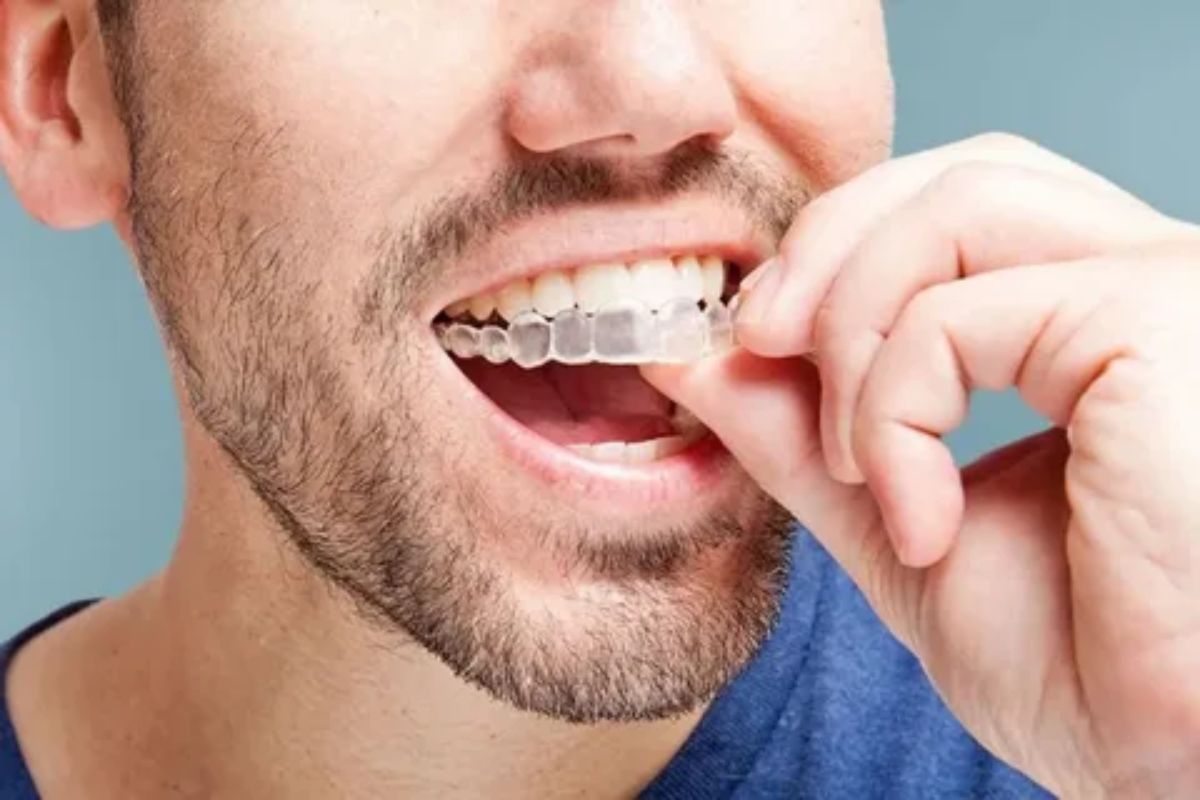
The 22 hour Invisalign wear requirement is very strict. According to Align Technology, the makers of Invisalign, aligners should be worn 20 to 22 hours per day, with removal only for eating, drinking anything other than water, and brushing and flossing. That leaves about 2 to 4 hours total per day for meals and oral care. Consistently falling below 20 hours can slow tooth movement and extend your treatment time.
A study published in the American Journal of Orthodontics and Dentofacial Orthopedics found that patients who wore their aligners for the full recommended time had significantly more predictable tooth movement compared to those with poor compliance. Even small lapses add up. If you remove your trays for a 30-minute breakfast, a 45-minute lunch, and a 1-hour dinner, plus brushing time, you are already at about 3 hours out of your mouth. Snacking in between adds more time without trays, which can push you past the limit.
The good news is that sticking to the 22-hour rule actually helps with pain management. The more consistently you wear your trays, the faster your teeth adjust and the less discomfort you feel when you put them back in after meals. Patients who take their trays out for long stretches often find that reinserting them feels tighter and more painful because the teeth have started to drift back.
Is 20 Hours a Day Enough for Invisalign?
Yes, 20 hours a day is generally considered the minimum for Invisalign to work, but 22 hours is the recommended target for optimal results. At 20 hours, your teeth are still receiving enough pressure to move, but the process may take slightly longer. Dropping below 20 hours regularly can cause tracking issues, where the trays no longer fit properly because your teeth have not moved as planned.
The difference between 20 and 22 hours may not seem like much, but over weeks and months, those extra 2 hours per day of wear time add up significantly. According to orthodontic experts, patients who consistently hit 22 hours tend to finish treatment faster, need fewer refinement trays, and experience better overall results. We always tell patients to aim for 22 hours and treat 20 as the absolute floor.
What If I Only Wear My Invisalign 15 Hours a Day?
If you only wear your Invisalign 15 hours a day, your teeth will not move as planned and your treatment will be significantly delayed. At 15 hours, your trays are out for 9 hours per day, which is more than enough time for your teeth to start drifting back. Your next set of aligners may not fit properly, causing discomfort, poor tracking, and the need for new scans and revised trays.
A study published in the Journal of Clinical Orthodontics found that inadequate wear time was the primary factor in prolonged treatment and less-than-ideal outcomes. Wearing aligners for only 15 hours puts you well below the minimum threshold needed for effective tooth movement. If you are consistently struggling to meet the wear-time requirement, talk to your provider. They can help you adjust your routine, evaluate whether orthodontic treatment with fixed braces might be a better fit, or offer solutions to help you stay on track.
How to Manage First Week Invisalign Pain
Eat Soft Foods
During the first few days, stick to soft foods that require minimal chewing. Smoothies, yogurt, scrambled eggs, mashed potatoes, soup, oatmeal, bananas, and applesauce are all easy on tender teeth. Avoid crunchy, hard, or chewy foods until the soreness passes. This reduces the strain on your teeth and makes eating much more comfortable.
Switch Trays at Night
One of the best tips we give patients is to put in a new set of aligners right before bed. This way, you sleep through the initial 6 to 8 hours of peak pressure. By the time you wake up, the worst of the tightness has already passed. This simple timing adjustment can make tray changes feel much more manageable throughout your entire treatment.
Use Over-the-Counter Pain Relief
If you need it, an over-the-counter pain reliever like ibuprofen or acetaminophen can help during the first day or two with a new tray. Take whatever you would normally take for a headache. Cold compresses applied to the outside of the jaw can also reduce inflammation and soothe muscle soreness. These measures are temporary and typically only needed during the first few tray changes.
Keep Wearing Your Trays
It might seem logical to take your trays out when your teeth are sore, but that actually makes the problem worse. The longer you leave your aligners out, the more your teeth shift back, and reinserting the trays feels tighter and more painful. Wearing your aligners consistently allows your teeth to settle into their new positions faster and reduces the overall duration of discomfort. A regular teeth cleaning before starting treatment also helps by removing buildup that can trap under the trays and irritate your gums.
How Fast Do Teeth Shift With Invisalign?
Teeth shift with Invisalign at a rate of about 0.25 to 0.3 millimeters per tray, which equals roughly 1 millimeter of movement per month. This rate is carefully calculated by ClinCheck software using data from over 22 million treated patients, according to Align Technology's 2025 annual report. Moving teeth too fast risks root damage, while moving them too slowly extends treatment unnecessarily.
Most patients start seeing subtle visible changes within 2 to 4 weeks. By 3 to 4 months, improvements in spacing and alignment become obvious. Front teeth tend to show changes first because they have shorter roots and respond more quickly to aligner pressure. Back teeth and molars take longer to move. By the halfway point of treatment, most patients see a significant difference in their smile.
The speed of movement depends on several factors, including the complexity of your case, your age, and how consistently you wear your trays. Younger patients often see faster results because their bone is more responsive to orthodontic forces. Adults can achieve the same results; it just sometimes takes a bit longer. According to a study in the Angle Orthodontist, clear aligner treatment averages about 18 months compared to 24 months for braces.
Can I Take My Invisalign Out for 5 Hours?
No, you should not take your Invisalign out for 5 hours. Five hours without your trays in a single stretch is too long and can cause your teeth to shift enough that your aligners feel very tight or may not fit properly when you put them back in. According to Align Technology's official guidelines, aligners should only be removed for meals and oral hygiene, with total daily removal time kept to about 2 to 4 hours.
If you have a special event where you want your trays out for a few hours, it is best to plan ahead. Wear your aligners for extra time in the days leading up to and following the event to make up for the missed hours. A one-time removal of 3 to 4 hours for a wedding or important dinner is unlikely to derail your treatment, but making it a habit will cause problems. Always put your trays back in as soon as possible after eating.
How Bad Is It to Miss One Day of Invisalign?
Missing one day of Invisalign is not ideal, but it is unlikely to cause serious harm if it happens once. Your teeth may shift slightly, and your trays will probably feel tighter when you put them back in. Go back to wearing your current set of aligners for an extra day before switching to the next tray. This gives your teeth time to catch up.
Missing multiple days in a row, however, is a bigger problem. According to adult orthodontics experts, even a few consecutive days without aligners can cause enough movement that your trays no longer track properly. If this happens, contact your provider. They may advise going back to a previous set of trays or taking new scans to get a revised plan. The key takeaway: one day is recoverable, but it should not become a pattern.
Invisalign Pain Comparison: First Week vs. Later Trays
FactorFirst Week (Tray 1)Later Tray ChangesPain Level (1-10 Scale)2 to 51 to 3Peak Discomfort24 to 48 hours after placement12 to 24 hours after switchingDuration of Soreness5 to 7 days1 to 3 daysJaw TendernessCommonRareLisp or Speech ChangesCommon (fades within a week)RareGum or Cheek IrritationPossible from new tray edgesMinimal (mouth has toughened)Increased SalivaCommonRareNeed for Pain MedicationOccasional (first 1-2 days)Rarely needed
Sources: Progress in Orthodontics, Angle Orthodontist, Journal of Dental Research, PMC (Discomfort Associated with Invisalign and Traditional Brackets), Healthline
What Is the Failure Rate of Invisalign?
The failure rate of Invisalign is approximately 4% to 12%, depending on case complexity and patient compliance. A 2024 study published in PMC found that 88% of Invisalign cases achieved successful malocclusion correction, compared to 90% for traditional braces. The most common reason for less-than-ideal results is not wearing the trays for the recommended 20 to 22 hours per day, not a flaw in the aligner system itself.
Over 72% of Invisalign patients require additional refinement aligners after their initial series, according to a 2024 cross-sectional study. This is a normal part of the process, not a failure. Refinements involve new scans and new trays that fine-tune the final result. Patients who complete their refinements and wear their retainers as directed achieve excellent long-term outcomes. Choosing a provider with significant aligner experience and attending every scheduled check-in are the two best things you can do to avoid problems.
When to Call Your Provider About Invisalign Pain
Some discomfort during the first week is normal and expected. But there are situations where you should contact your dentist or orthodontist right away. If you experience sharp, stabbing pain that does not improve after 3 to 5 days, pain that gets worse instead of better, extreme cold sensitivity that was not there before, swelling or bleeding in your gums, or a tray that clearly does not fit, these are signs something beyond normal adjustment is happening.
According to orthodontic providers, persistent pain beyond the first week can indicate a cracked aligner, a problem with an attachment, or an underlying dental issue that needs treatment. A dental checkup can identify the cause quickly and get your treatment back on track. We see patients in Hialeah who are surprised at how quickly a small issue can be resolved when they reach out early instead of waiting.
Frequently Asked Questions
What Is the Hardest Week of Invisalign?
The hardest week of Invisalign is the first week. Your mouth is adjusting to the trays for the very first time, and the pressure on your teeth is completely new. A study in Progress in Orthodontics found that pain peaks at about 24 hours after initial placement and fades within 5 to 7 days. After the first tray, each new set produces less discomfort and resolves faster.
Does Invisalign Pain Get Better After the First Week?
Yes, Invisalign pain gets significantly better after the first week. A 2019 study published in the Journal of Dental Research found that pain scores dropped 40% to 50% between the first and fifth tray changes. Your periodontal ligaments adapt to the orthodontic forces, and by mid-treatment, most patients barely feel new tray changes at all.
Is 47 Trays a Lot for Invisalign?
No, 47 trays is not unusually high for Invisalign. It falls in the range for moderate to complex cases. Simple cases may need only 10 to 20 trays, while complex cases can require 50 or more. With a 1-week change schedule, 47 trays takes about 11 months. With a 2-week schedule, it takes about 22 months. Your provider will determine the right number based on your specific treatment plan.
How Many Trays Is 2 Years of Invisalign?
Two years of Invisalign is approximately 48 to 52 trays on a 2-week change schedule, or up to 104 trays on a weekly schedule. The exact number depends on your case complexity and whether refinement trays are included. According to research data, over 72% of patients need additional refinement trays beyond their initial series, which can add 5 to 15 more trays to the total.
Can I Take Ibuprofen for Invisalign Pain?
Yes, you can take ibuprofen for Invisalign pain if you normally tolerate it well. Over-the-counter pain relievers like ibuprofen or acetaminophen are safe to use during the first few days of a new tray. Most patients only need them during the first 1 to 2 tray changes. After that, the discomfort with new trays is mild enough that medication is rarely needed.
Does Invisalign Hurt More Than Braces?
No, Invisalign does not hurt more than braces. A 2020 systematic review in the Angle Orthodontist found that clear aligner patients consistently reported lower pain intensity, shorter pain duration, and less need for pain medication compared to patients with fixed braces. Invisalign patients typically rate pain at 2 to 4 out of 10, while braces patients rate it 4 to 7 after adjustments. The smooth plastic of aligners versus braces also eliminates the cheek and lip irritation caused by metal brackets and wires.
Why Does One Tooth Hurt More Than Others With Invisalign?
One tooth hurts more than others with Invisalign because each aligner is engineered to move specific teeth at specific stages. The tooth receiving the most active movement in a particular tray will feel the most pressure. Sometimes a single tooth needs to shift significantly to create space for others, and that focused force causes isolated soreness. This is completely normal and a sign that the aligner is working as designed.
The Bottom Line
The first week of Invisalign is the hardest part of the entire process, but the discomfort is mild, temporary, and completely manageable. Pain peaks around 24 hours after placing your first trays and fades within 5 to 7 days. After that, every new tray change gets easier. Eating soft foods, switching trays at bedtime, and wearing your aligners consistently are the best ways to reduce discomfort. If pain persists beyond a week or feels severe, contact your provider right away.
If you are considering clear aligners and want to know exactly what the experience will be like for you, Castellanos Dental Aesthetics has helped patients across South Florida for over 25 years. Call (305) 820-4080 to schedule a consultation and take the first step toward a straighter, healthier smile.
.png)
.png)

.png)


.png)

.png)
.png)

.png)
.png)
.svg)


